After a car accident in California, the calls start fast. The insurer wants a statement. The bills arrive before you know the extent of your injuries. You're trying to recover while making decisions that will affect your case for years. The lawyer you choose in these first days or weeks matters more than most people realize.
Your initial consultation is the moment to find out whether a firm has the experience, strategy, and communication style to actually handle your case. Before you sign anything, here is exactly what to ask a California car accident lawyer.
To find the right advocate, you must evaluate five decision pillars: proven California experience, litigation strategy, fee transparency, realistic damage assessment, and attorney accessibility. And because California car accident claims involve complex liability laws and strict filing deadlines, your choice of counsel directly impacts your ability to secure full and fair compensation.
Quick Preview: Key Questions to Ask a Car Accident Lawyer
| Category | Key Questions |
|---|---|
| Experience & Case Fit |
|
| Fees & Costs |
|
| Strategy/Timeline |
|
| Evidence/Value |
|
| Communication/Access |
|
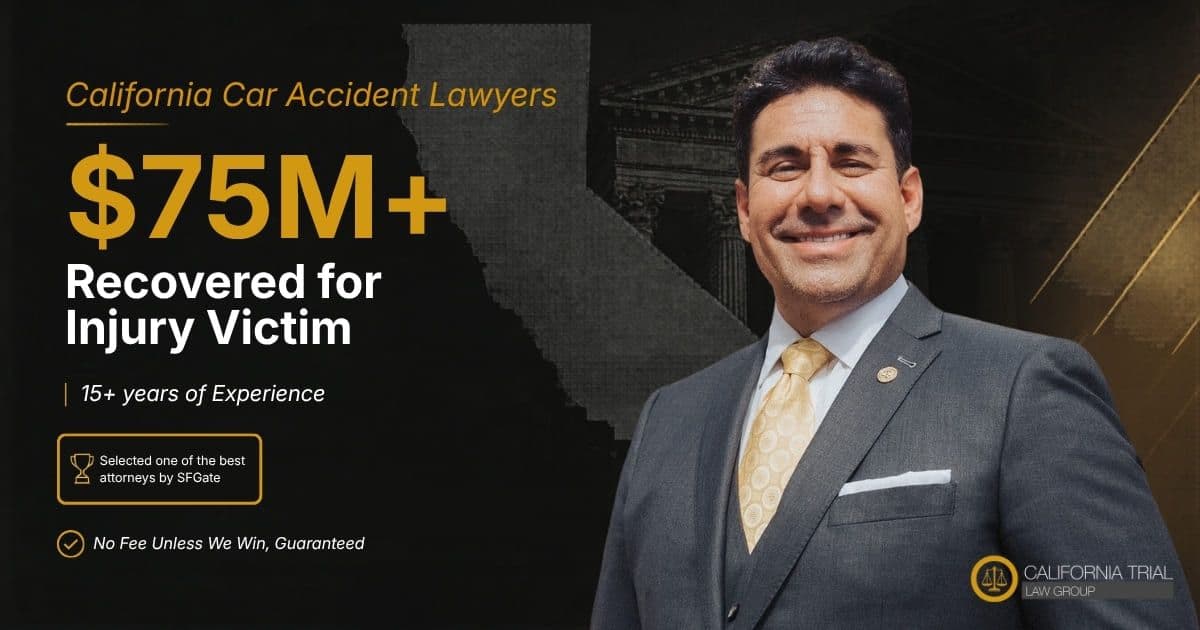
The auto accident team at California Trial Law Group, led by trial attorney Ike M. Kaludi, is built to answer every one of these questions clearly before you sign anything. If you're ready to get answers, schedule a free consultation.
Since every California car accident case is different, your first consultation is a chance to test whether the lawyer’s experience and plan actually fit your situation. Use the following set of questions as an interview checklist; the goal is to compare lawyers side by side before you sign a retainer. These questions focus on five crucial areas: experience, strategy, costs, damages proof, and communication.
Case fit usually matters more than a lawyer’s “years in practice.” You want someone who has handled the same kind of California crash problems you’re facing: similar injuries, similar insurance issues, and the same liability disputes. Ask for specifics and verify credibility. The goal is to hear clear, high-level examples and a realistic explanation.
Follow-up questions to ask:
Red Flags: Vague claims of “years of experience” without specific trial data, or a refusal to discuss the risks of your case, especially in cases involving truck accidents, where carrier liability, driver negligence, and insurer disputes often overlap.

Even a highly qualified firm can feel like the wrong choice if your case gets handed off, updates are inconsistent, or you can’t reach anyone when the insurer is calling. This screening question can help confirm who’s responsible for what, how communication works, and how involved the attorney will be day to day.
Follow-up questions to ask:
What a clear answer sounds like: A named point of contact, a defined update pattern, and a straightforward explanation of who steps in if the case escalates into litigation. Be wary of vague promises of “someone will call you” or finding out that the firm outsources all litigation to a different office.
Clarity on legal costs prevents surprises. Before you hire a firm, you should understand exactly how you’ll pay and what “case expenses” mean in practice. This is where you confirm the fee structure, upfront costs, out-of-pocket expenses, or hidden costs that might arise before, during, or after the resolution of your case.
Follow-up questions to ask:
Don’t rely on verbal explanations, and make sure the key terms are spelled out in the written fee agreement before you sign.

Questions about strategies test for a concrete plan rather than vague promises. A prepared California accident lawyer will explain how they intend to prove liability and increase your claim's value.
Follow-up questions to ask:
Listen for: A step-by-step roadmap that details the process from the initial investigation to the final resolution. If the crash involved a commercial vehicle or a multi-vehicle chain-reaction crash, strategy becomes even more layered, as multiple parties may share liability. Watch out for any lawyers who promise a huge payout immediately without seeing your documents first.
A strong case relies on admissible proof, not subjective opinions. Evidence-related questions reveal how thorough the attorney is, what they prioritize, and whether they have an actual system for collecting and organizing evidence instead of waiting for the insurance company to demand documents first.
Quick evidence checklist:
| What You Provide | What the Firm Obtains |
|---|---|
|
|
Follow-up questions to ask:
Listen for: specific evidence priorities and a plan for gaps, not vague statements like “we’ll get everything” without explaining how, when, or what they do if the insurer disputes liability or the extent of injuries.
Once you’re confident that a lawyer can handle your case, the next goal is understanding how your injuries translate into proof and recoverable damages.
Injuries, treatment, and damages questions to ask:
These questions help you uncover how a firm substantiates different categories of damages that your medical documentation supports, including those for ongoing and future expenses, such as the true long-term cost of a spinal cord injury or traumatic brain injury, both of which often require years of medical care and rehabilitation.
A good sign: A proof-based explanation and follow-up questions about your treatment and daily impact, instead of rushing straight to a settlement estimate.

Another thing you would want to confirm is how effectively the attorney will shield you from intimidating questions and high-pressure offers from insurers. Insurance companies are experts at minimizing payouts; you need to know exactly how the firm will take over these communications so you can stop worrying about saying the wrong thing and focus entirely on your physical recovery.
Before responding to any demands or requests from an insurer, ask these questions:
If you have already spoken with the insurance company, ask these questions to clarify how your attorney will protect your interests moving forward:
What to listen for: Calm, specific guidance on what the lawyer will handle, what you should and shouldn't sign or say, and a clear plan for dealing with pressure tactics, without rushing you into decisions.
Deadlines to file a car accident claim are strict in California, and waiting can reduce your options, even if you're still figuring out treatment or repairs. Under California CCP §335.1, most personal injury claims must be filed within two years of the date of injury.
If a government entity is involved (a city bus, a public vehicle, or a poorly maintained public road), the deadline is far shorter: six months to file an administrative claim.
Missing either deadline ends your right to compensation, regardless of how clear the other driver's fault was.
Beyond legal statutes, evidence often disappears quickly: security video can be overwritten, vehicles are repaired or totaled, accident scenes change, and witness memories fade. Early organization and consistent documentation usually lead to more serious negotiations.
Ask your lawyer:
What to do in the next 72 hours after your auto accident in California:
If you're unsure what to do immediately after the crash itself, this step-by-step post-accident guide walks you through the full process.
To get the most out of a consultation and compare firms confidently, show up organized so the lawyer can evaluate your personal injury claim quickly, and you can ask the right questions. A little prep makes it easier to get clear answers on strategy, costs, and next steps.
It is completely normal to feel overwhelmed during a legal consultation. If you want to see how real clients describe their experience with us before deciding, you can read client testimonials directly. Your goal isn't to be a legal expert; it is to find a partner who is transparent, responsive, and has a clear strategy to protect your future without making you feel pressured.
Evaluate your consultation using this micro-scorecard:
A firm that cannot give direct answers on these points is telling you something. Keep looking.
If you are seeking clear answers before signing a legal contract or speaking with an insurance adjuster again, we invite you to request a private case consultation. At California Trial Law Group (Albany), our team of experienced California auto accident lawyers, led by trial attorney Ike M. Kaludi, is here to answer your questions, address your concerns, and provide the insights you need to move forward with confidence, long before you make a final hiring decision.
What to expect from your initial consultation:
Legal Clarity | Confidentiality | Zero Hiring Pressure | No Financial Obligation
This consultation does not establish an attorney-client relationship. If you’re ready to take the next step with clarity and confidence, start with a free consultation by calling 866-611-5397 or submitting a contact form.
To help your motor vehicle accident attorney evaluate your claim quickly, bring the police report (or the exchange-of-information form), your auto insurance declarations page, and any photos of the scene or vehicle damage. You should also include medical discharge papers, work status notes for lost wages, and any letters or emails you have received from insurance adjusters.
The value of a settlement is primarily driven by the severity of the injuries, the clarity of fault, and the amount of available insurance coverage. Other critical factors include economic damages (like surgery costs and future lost earning capacity) and non-economic damages, such as permanent scarring or a significant loss of quality of life. Catastrophic injuries such as spinal cord damage, cervical injuries, or traumatic brain injury can significantly elevate case value due to their long-term medical and financial impact.
Personal injury attorneys look for and prioritize liability clarity, documented injuries, available insurance coverage, and whether damages can be proven with records. They also assess deadlines, evidence quality, and whether the claim can be built without major proof gaps.
Yes. Choosing a lawyer is a major decision, and you should feel comfortable with their communication style and strategy. If a lawyer seems distracted, dismissive, or refuses to explain their fee structure clearly, getting a second opinion ensures you find a partner who is truly invested in your recovery.
There is no “fixed” price for pain and suffering. Instead, it is usually calculated based on how much the injury has disrupted your daily life. California lawyers and insurers often look at the duration of your recovery, the intensity of your pain, and whether you have sustained any long-term physical limitations.
Compensation for emotional distress, such as anxiety, PTSD, or “driving phobia,” is common in California, particularly following severe crashes such as head-on collisions or motorcycle accidents, where the trauma is often more acute. While harder to quantify than a medical bill, it is often proven through testimony from mental health professionals, journals tracking your symptoms, and evidence of how your mental health has impacted your ability to work or maintain relationships.

![[object Object]](/_next/image?url=%2F_next%2Fstatic%2Fmedia%2Fbadge-12.dc462899.png&w=1920&q=75)
![[object Object]](/_next/image?url=%2F_next%2Fstatic%2Fmedia%2Fbadge-1.84d39f5d.png&w=384&q=75)
![[object Object]](/_next/image?url=%2F_next%2Fstatic%2Fmedia%2Fbadge-3.30517db2.png&w=384&q=75)
![[object Object]](/_next/image?url=%2F_next%2Fstatic%2Fmedia%2Fbadge-4.c449d07d.png&w=384&q=75)
![[object Object]](/_next/image?url=%2F_next%2Fstatic%2Fmedia%2Fbadge-5.251e1420.png&w=1080&q=75)
![[object Object]](/_next/image?url=%2F_next%2Fstatic%2Fmedia%2Fbadge-6.e1d85cbc.png&w=384&q=75)
![[object Object]](/_next/image?url=%2F_next%2Fstatic%2Fmedia%2Fbadge-7.3fcf7c05.png&w=384&q=75)
![[object Object]](/_next/image?url=%2F_next%2Fstatic%2Fmedia%2Fbadge-8.3e662d12.png&w=384&q=75)
![[object Object]](/_next/image?url=%2F_next%2Fstatic%2Fmedia%2Fbadge-9.60ef0ba6.png&w=384&q=75)
![[object Object]](/_next/image?url=%2F_next%2Fstatic%2Fmedia%2Freputation-award.3f62935c.png&w=3840&q=75)
![[object Object]](/_next/image?url=%2F_next%2Fstatic%2Fmedia%2Fbadge-11.9de1d49a.png&w=1920&q=75)
![[object Object]](/_next/image?url=%2F_next%2Fstatic%2Fmedia%2Fbadge-13.de4d644c.png&w=640&q=75)