California Head-On Collision Lawyer
Over $30 Million Won for California Clients in 2025 Alone
![[object Object]](/_next/image?url=%2F_next%2Fstatic%2Fmedia%2Fbadge-12.dc462899.png&w=1920&q=75)
![[object Object]](/_next/image?url=%2F_next%2Fstatic%2Fmedia%2Fbadge-1.84d39f5d.png&w=384&q=75)
![[object Object]](/_next/image?url=%2F_next%2Fstatic%2Fmedia%2Fbadge-2.736d1614.png&w=384&q=75)
![[object Object]](/_next/image?url=%2F_next%2Fstatic%2Fmedia%2Fbadge-3.30517db2.png&w=384&q=75)
![[object Object]](/_next/image?url=%2F_next%2Fstatic%2Fmedia%2Fbadge-4.c449d07d.png&w=384&q=75)
![[object Object]](/_next/image?url=%2F_next%2Fstatic%2Fmedia%2Fbadge-5.251e1420.png&w=1080&q=75)
![[object Object]](/_next/image?url=%2F_next%2Fstatic%2Fmedia%2Fbadge-6.e1d85cbc.png&w=384&q=75)
![[object Object]](/_next/image?url=%2F_next%2Fstatic%2Fmedia%2Fbadge-7.3fcf7c05.png&w=384&q=75)
![[object Object]](/_next/image?url=%2F_next%2Fstatic%2Fmedia%2Fbadge-8.3e662d12.png&w=384&q=75)
![[object Object]](/_next/image?url=%2F_next%2Fstatic%2Fmedia%2Fbadge-9.60ef0ba6.png&w=384&q=75)
![[object Object]](/_next/image?url=%2F_next%2Fstatic%2Fmedia%2Freputation-award.3f62935c.png&w=3840&q=75)
Head-on collisions are among the most violent and deadly crash types on California roads. These frontal impacts are disproportionately fatal compared to other collisions, per NHTSA. If you or a loved one survived one, the physical and emotional aftermath can be overwhelming. The insurance company on the other side is a business, and its adjusters are trained to protect their interests, not yours.
At California Trial Law Group, attorney Ike M. Kaludi is a Super Lawyers honoree with a record of significant recoveries in serious motor vehicle cases across California. Our California head-on collision lawyer represents injured drivers, passengers, and wrongful death claimants statewide, handling everything from crash investigation and evidence preservation to demand negotiation and trial on a contingency fee basis.
If a negligent driver, an impaired motorist, or a reckless lane-crosser put you here, call (888) 238-7562 or fill out our contact form for a free, confidential case evaluation.
Our office is located at 828 San Pablo Ave., Suite 109, Albany, CA 94706.
- • $1,600,000 recovered in a multi-plaintiff motor vehicle collision resulting in significant orthopedic trauma, including bilateral knee surgeries and soft-tissue injuries.
- • Super Lawyers Recipient: 2024–2026
- • Rising Stars Recipient: 2016–2023
- • Named one of the Top Attorneys of North America
- • Selected as one of the best attorneys by SFGate
- • Rated 4.7 Stars on Google by our clients
- • Contingency Fee Guarantee: You pay no attorney fees unless we win
- • Bilingual Support: Serving clients in English and Spanish
The California Trial Law Group Advantage
Past results do not guarantee future outcomes. Results vary based on the specific facts of each case.
“Mr. Ike Kaludi represented me in my trial a few years ago and he won my case. Recently, I was involved in an accident and I hired Ike again to represent me. He and his staff did a fantastic job and were able to settle the case quickly and efficiently. Ike gives 110% to all of his cases and I saw that in both of the cases that he handled for me. I highly recommend Ike as a good negotiator and someone who will work hard for you."
— Wendy B. · Google Review · 2017
What Is a Head-On Collision and Why Are They So Dangerous?
A head-on collision, also called a frontal collision, occurs when the fronts of two vehicles traveling in opposite directions strike each other. These crashes cause some of the most severe injuries seen in personal injury law because both vehicles' speeds combine at the moment of impact, and occupants absorb the full force. Even with crumple zones and airbags, high-speed frontal crashes can overwhelm these protections entirely.
Rural two-lane roads are the most dangerous. SR-99, US-101, SR-1 (Pacific Coast Highway), I-5, and SR-138 through the Antelope Valley all lack center median barriers along significant stretches, meaning a single moment of lane departure can be fatal. Dense traffic corridors in Los Angeles, Riverside, and San Bernardino Counties compound the risk where urban routes meet rural road design.
What Causes Most Head-On Collisions in California?
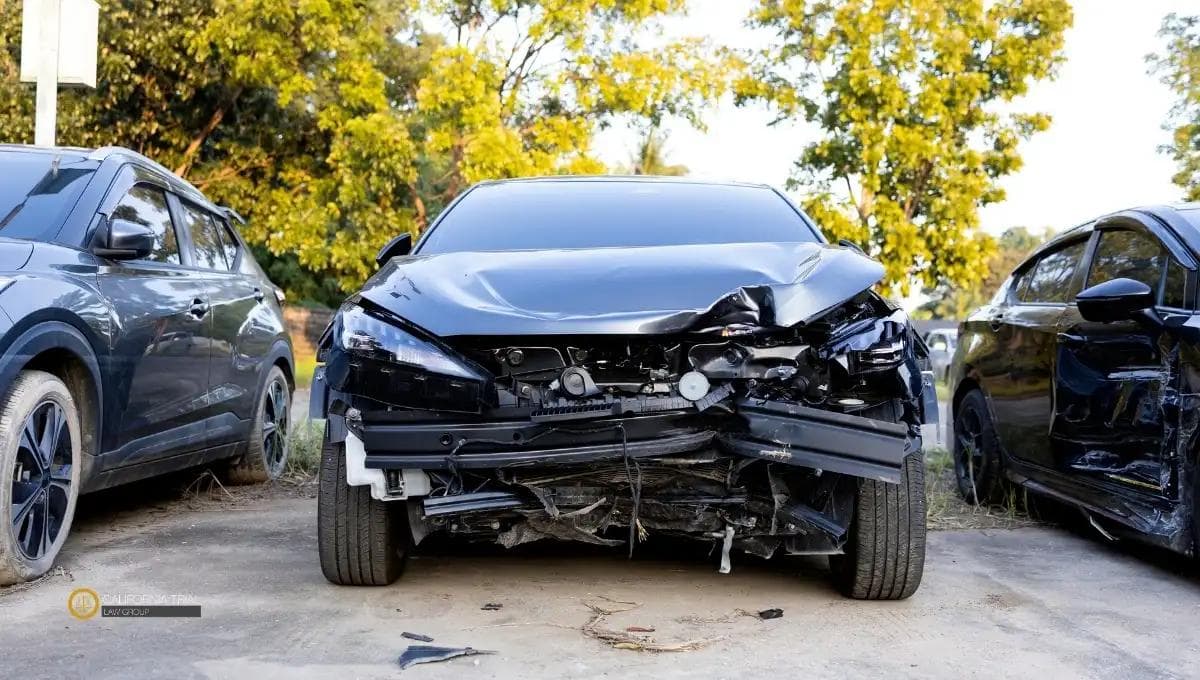
Most head-on crashes trace back to a preventable decision. Each cause below carries distinct legal weight. Our head-on car accident attorneys build the evidentiary record around the specific cause from the moment a case is opened.
- Wrong-Way Driving and Lane Departure: Crossing a double yellow line violates California Vehicle Code 21460. Under the negligence per se doctrine, the legal principle that a traffic violation itself satisfies the breach-of-duty element of a negligence claim, the victim does not need to separately prove the driver acted unreasonably. The violation does that work.
- Drunk or Impaired Driving (DUI): According to NHTSA's data, alcohol-impaired driving fatalities accounted for 30% of all U.S. traffic deaths that year. Impaired judgment remains a leading cause of wrong-way freeway entries in California.
- Distracted Driving: Per UC Berkeley SafeTREC, head-on crashes are among the top five crash types in distracted driving fatalities. A driver glancing at a phone for five seconds at 55 mph covers the length of a football field without looking at the road.
- Drowsy and Fatigued Driving: Common on SR-99 and US-101, fatigue-induced lane departure is recognized as negligence in California personal injury claims. Research from the AAA Foundation for Traffic Safety shows that drivers getting only 4-5 hours of sleep more than quadruple their crash risk compared to those getting 7+ hours.
- Speeding and Illegal Passing: Passing on a solid yellow line violates California Vehicle Code § 21752 and is frequently the final act before a frontal impact. The negligence per se doctrine applies here as well.
- Weather and Road Conditions: Fog, rain, and reduced visibility on coastal and mountain roads contribute to head-on crashes, particularly along SR-1 and in the Sierras. Often, road design failures, missing median barriers, or inadequate signage also contribute to a crash.
Not sure who was at fault for your crash? Contact California Trial Law Group for a free, confidential case evaluation.
Common Injuries in Head-On Collisions
Injuries to the head, neck, chest, and spine are especially common due to the direction and force of the crash.
Common injuries include:
- Traumatic brain injury (TBI) and concussion
- Spinal cord injury and paralysis
- Cervical injury and herniated discs
- Broken bones, including ribs, sternum, and pelvis
- Internal bleeding and organ damage
- Chest trauma from the steering wheel or seatbelt force
- Facial lacerations, scarring, and disfigurement
- Permanent nerve damage and disability
- PTSD and emotional distress
When a head-on collision proves fatal, surviving family members may pursue a wrongful death claim under California law.
Call (888) 238-7562 for a free case evaluation.
Who Can Be Liable in a California Head-On Collision?
California is an “at-fault” state, which means victims of a head-on collision are not limited to their own insurance for compensation. Instead, California law allows injured people to hold every negligent party fully accountable for their losses. In a frontal crash, liability often extends beyond the driver who crossed the center line.
To establish any defendant's liability, four elements of negligence must be present: (1) the defendant had a duty to drive safely, (2) they breached that duty through carelessness or a traffic violation, (3) you suffered an injury, and (4) their breach caused your injury. When a traffic law was violated, the negligence per se doctrine can satisfy elements 1 and 2 without requiring additional proof of unreasonable conduct.
- The At-Fault Driver: The most common defendant. Negligence, recklessness, or DUI all support a direct personal injury or wrongful death claim.
- A Government Entity: When road design failures contribute to a crash, the responsible government agency can be a defendant. These claims require meeting a six-month deadline for filing a formal government tort claim shorter than the two-year personal injury statute of limitations, and they require dedicated evidentiary work to prove the road condition caused the crash.
- A Vehicle Manufacturer: Brake failure, steering defects, or tire blowouts that caused a driver to cross into oncoming traffic may give rise to a product liability claim. These require dedicated expert investigation, and we bring in the right specialists.
- A Hit-and-Run Driver: If the at-fault driver fled the scene, your own Uninsured Motorist (UM) coverage typically becomes the primary recovery path. UM coverage, which you purchase as part of your own auto policy, allows you to make a claim directly with your own insurer when the at-fault driver cannot be identified or has no insurance. Witnesses, nearby surveillance cameras, and dashcam footage are critical in these cases.

What Evidence Helps Prove Liability?
Proving fault requires more than a police report. Here is what our team pursues immediately after case intake:
- CHP collision report and traffic investigation notes.
- Dashcam and traffic camera footage is often overwritten within 24 to 72 hours.
- Black box / EDR data showing pre-impact speed, braking, and steering inputs.
- Cell phone and app usage records in distracted driving cases.
- Toxicology reports and DUI arrest records when impairment is suspected.
- Accident reconstruction expert analysis.
- Road maintenance and government inspection logs when road conditions are a factor.
- Witness statements.
What If I Was Partially at Fault for the Collision
Sharing some fault does not end your claim. Under California's pure comparative negligence rule, your compensation is reduced in proportion to your percentage of fault, but you are not barred from recovering altogether. If you were 20% at fault on a $300,000 claim, you would still recover $240,000.
Insurers routinely inflate a victim's share of blame to shrink their payout. We counter that early, with evidence, before any recorded statement is given.
How Insurance Companies Respond
Regardless of who the defendant is, insurers rarely pay what a claim is worth without challenge. Common tactics include questioning whether the collision actually caused your injuries, assigning partial fault to you to reduce their payout, or making an early lowball settlement offer before your full medical picture is known. The legal team at California Trial Law Group counters these tactics early, before any recorded statement is given and before any medical records are released.
What Injuries Do Head-On Collisions Commonly Cause?
Injuries to the head, neck, chest, and spine are especially common due to the direction and force of the crash.
Common injuries include:
- Traumatic brain injury (TBI) and concussion
- Spinal cord injury and paralysis
- Cervical injury and herniated discs
- Broken bones, including ribs, sternum, and pelvis
- Internal bleeding and organ damage
- Chest trauma from the steering wheel or seatbelt force
- Facial lacerations, scarring, and disfigurement
- Permanent nerve damage and disability
- PTSD and emotional distress
When a head-on collision proves fatal, surviving family members may pursue a wrongful death claim under California law.
Call (888) 238-7562 for a free case evaluation.
Compensation Available for Head-On Collision Victims
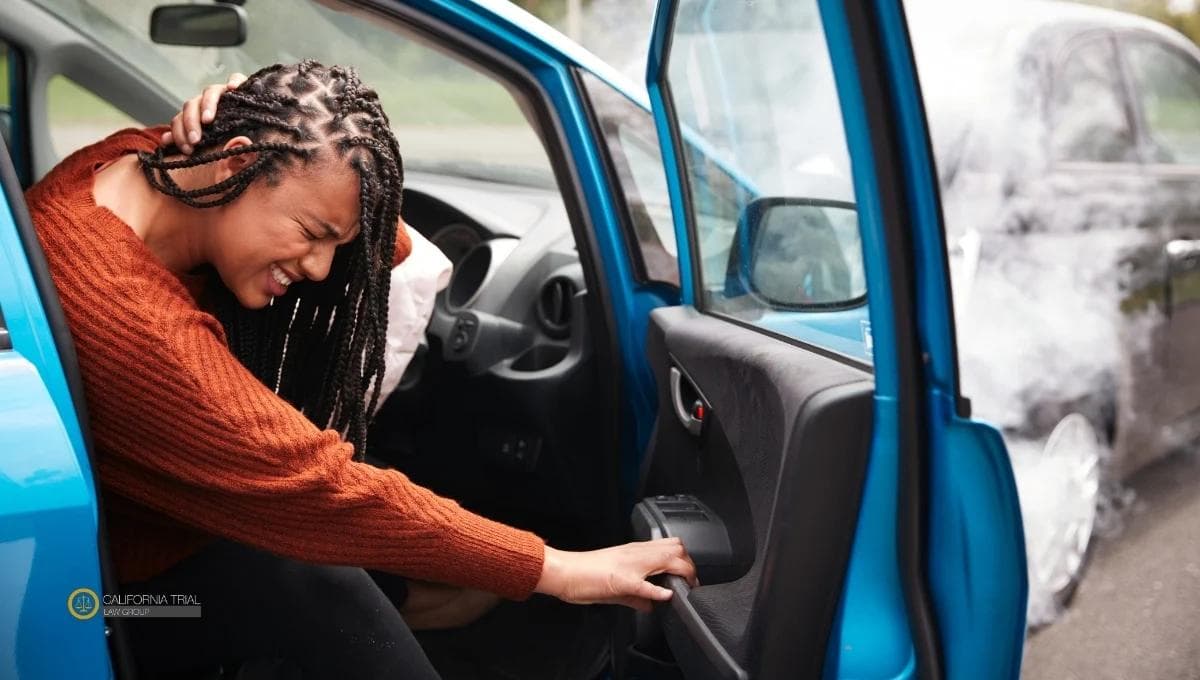
In California, victims of head-on car accidents can recover compensation for two primary categories of damages: economic damages, which cover measurable financial losses, and non-economic damages, which compensate for the human cost of the injury. Both are available in most serious collision cases.
- Economic Damages
- Past and future medical bills
- Surgery, rehabilitation, and physical therapy
- Lost wages and reduced earning capacity
- Property damage and out-of-pocket expenses
- Non-Economic Damages
- Pain and suffering
- Emotional distress and PTSD
- Loss of enjoyment of life
- Loss of consortium for a spouse or domestic partner
- Permanent disability and disfigurement
In cases involving DUI or extreme recklessness, punitive damages may also be available under California Civil Code § 3294. They are rare in car accident cases and require clear and convincing evidence that the defendant acted with malice, oppression, or fraud, a higher bar than standard negligence. Not every case qualifies. A car accident attorney can assess whether the facts support pursuing them.
If you are unsure what your claim may be worth, a free, confidential case evaluation with California Trial Law Group costs you nothing and puts you in a better position to make that decision.
What Should You Do After a Head-On Collision in California?
The steps taken in the first hours after a crash directly affect the strength of a claim:
- Call 911. On state highways, the CHP typically responds. Request law enforcement and emergency medical services.
- Seek medical attention immediately. Adrenaline masks pain. Serious injuries, including TBI and internal bleeding, often present no symptoms at the scene. Victims in Riverside County are frequently treated at Level I Trauma Centers, including Riverside University Health System and Loma Linda University Medical Center, both verified for critical care.
- Document everything. Photograph damage, skid marks, road conditions, license plates, and visible injuries before anything is moved.
- Collect witness contact, names, and phone numbers from anyone who saw the crash.
- Decline recorded statements. Do not speak to the other driver's insurer without legal counsel.
- File a DMV SR-1 report within 10 days if anyone was injured or killed or if property damage exceeds $1,000.
- Contact a California car accident lawyer before signing anything, including any early settlement offer.
How We Handle Your Head-On Collision Case
Step 1 - Immediate Evidence Preservation: We send evidence preservation letters the same day we are retained to safeguard camera footage, vehicle black box data, and traffic records before they are overwritten or destroyed. The window to preserve this evidence closes in hours, not days.
Step 2 - Liability Assessment: We identify all potentially liable parties: the at-fault driver, vehicle manufacturers, government entities if road conditions contributed to the crash, and any relevant third parties. We work with accident reconstruction experts when causation is disputed.
Step 3 - Damages Documentation and Insurer Negotiation: We calculate the real value of your claim before entering any negotiation, including future medical costs, lost earning capacity, and non-economic damages. We handle all adjuster communications so you do not have to speak with them directly.
Step 4 - Filing Suit If Necessary: If the insurer refuses a fair offer, we file the lawsuit in the appropriate court. Every case is prepared for trial from day one, which is what produces better settlements before that becomes necessary.
Step 5 - Recovering Compensation: Once a settlement is reached or a verdict returned, we manage the resolution process, including negotiating medical liens to maximize the net amount you receive. No attorney fees unless we recover for you.
California Cities We Serve as Car Accident Attorneys
Our attorneys handle car accident cases across California - bringing legal guidance directly to your community.
Work With an Experienced Head-On Collision Attorney at California Trial Law Group
“Skilled Negotiators, Aggressive Litigators”
In the initial hours after being retained, our team sends spoliation letters to preserve camera footage, secures black box data before it is cleared, and begins building the evidentiary record before the insurer has a chance to shape the narrative. The evidence window in a head-on crash closes faster than most people realize.
California's two-year statute of limitations begins on the date of the crash, and government claims are much stricter. The longer the representation is delayed, the more evidence disappears and the stronger the insurer's negotiating position becomes relative to yours.
California Trial Law Group serves clients across the Bay Area, Sacramento Valley, Central Valley, Los Angeles, San Diego, and everywhere in between. If you cannot travel due to injury, we will come to you.
Have questions about your specific situation? Reach out for a free, confidential case evaluation. There is no cost to speak with our team.

ATTORNEY ADVERTISING: The information on this website is for general informational purposes only and does not constitute legal advice. California Trial Law Group does not form an attorney-client relationship through this website. The attorney listings on the site are attorney advertisements and should not be viewed as a referral or endorsement by any state agency or bar association. No certification as a specialist in any field of law is claimed by the lawyers listed here. Results from one case are not a guarantee of future outcomes, as each case has unique aspects. This website is intended to provide general information; it is up to you to decide if a particular attorney is suitable for your legal needs. You may be responsible for certain costs or expenses in addition to any contingency fee arrangement for attorney's fees. By using this site, you agree to our Terms and Conditions. This site is protected by reCAPTCHA and the Google Privacy Policy and Terms of Service apply.
The contents of this website and any attached or linked materials are intended solely for informational purposes and should not be taken as legal advice for any individual case or situation. Viewing this material does not create an attorney-client relationship. Choosing an attorney is a crucial decision and should not be based solely on advertisements. The outcome of your specific case will depend on its particular facts; previous results do not guarantee a similar outcome. Each case must be evaluated on its own merits. Reports of past cases on this website are not intended to generate unjustified expectations about any future case you might have.
California Trial Law Group is dedicated to defending the rights of the elderly in nursing home abuse cases. Our website offers general information and directs you to contact us for personalized legal advice tailored to the specifics of your situation. No attorney-client relationship is established by your use of this site or by any communication initiated through this website's contact forms. California Trial Law Group © 2026. All Rights Reserved.