California Rear-End Car Accident Lawyer
Over $30 Million Won for California Clients in 2025 Alone
![[object Object]](/_next/image?url=%2F_next%2Fstatic%2Fmedia%2Fbadge-12.dc462899.png&w=1920&q=75)
![[object Object]](/_next/image?url=%2F_next%2Fstatic%2Fmedia%2Fbadge-1.84d39f5d.png&w=384&q=75)
![[object Object]](/_next/image?url=%2F_next%2Fstatic%2Fmedia%2Fbadge-2.736d1614.png&w=384&q=75)
![[object Object]](/_next/image?url=%2F_next%2Fstatic%2Fmedia%2Fbadge-3.30517db2.png&w=384&q=75)
![[object Object]](/_next/image?url=%2F_next%2Fstatic%2Fmedia%2Fbadge-4.c449d07d.png&w=384&q=75)
![[object Object]](/_next/image?url=%2F_next%2Fstatic%2Fmedia%2Fbadge-5.251e1420.png&w=1080&q=75)
![[object Object]](/_next/image?url=%2F_next%2Fstatic%2Fmedia%2Fbadge-6.e1d85cbc.png&w=384&q=75)
![[object Object]](/_next/image?url=%2F_next%2Fstatic%2Fmedia%2Fbadge-7.3fcf7c05.png&w=384&q=75)
![[object Object]](/_next/image?url=%2F_next%2Fstatic%2Fmedia%2Fbadge-8.3e662d12.png&w=384&q=75)
![[object Object]](/_next/image?url=%2F_next%2Fstatic%2Fmedia%2Fbadge-9.60ef0ba6.png&w=384&q=75)
![[object Object]](/_next/image?url=%2F_next%2Fstatic%2Fmedia%2Freputation-award.3f62935c.png&w=3840&q=75)
Getting rear-ended in California rarely feels catastrophic in the immediate aftermath. The airbags may not have deployed. Your car might be drivable. You walk away from the scene, telling yourself it was just a fender bender.
But rear-end collisions often cause whiplash, disc injuries, and soft-tissue damage that do not fully show up until hours or days later, when the insurer is already working to limit what your claim is worth.
California Trial Law Group, led by Super Lawyers-recognized attorney Ike M. Kaludi, represents rear-end crash victims across California in cases involving disputed fault, delayed injuries, and low settlement tactics. Our rear-end car accident lawyer in California preserves evidence, documents the full scope of your injuries and losses, and pursues compensation for drivers, passengers, and families on contingency. You pay no attorney fees unless we recover for you.
Do not let the evidence disappear. Call (888) 238-7562 now for a free consultation.
- • $4.75 million rear-end settlement - Recent landmark recovery in a high-impact rear-end freeway collision in which the defendant admitted fault, with injuries including cervical, lumbar, and lower-extremity radiculopathy
- • Super Lawyers 2024–2026 | Rising Stars 2016–2023
- • Contingency fee - no attorney fees unless we win
- • Free consultation, available 24/7
- • Bilingual representation - English and Español
- • Statewide coverage - Bay Area, Central Valley, Southern California
Why California Trial Law Group?
Why Rear-End Crashes Are More Dangerous Than They Look
Rear‑end crashes often look like minor car accidents, but they can be far more dangerous than they appear because of how abruptly the body and vehicle are jerked, what types of injuries they can cause, and how seriously insurers sometimes underestimate the harm.
Why they feel deceptively minor:
- Vehicles may still drive away, with only a bent bumper or small dent, so drivers and insurers assume “no big deal.”
- The impact is often at an angle or partially absorbed by the trunk, which can mask frame damage, hidden mechanical issues, and internal injuries that flare up later.
Hidden and serious injuries:
- Whiplash, cervical injuries, herniated or bulging discs, shoulder injuries, rib pain, lower back trauma, headaches, and emotional distress tied to pain and driving anxiety.
- The sudden lurch can also cause traumatic brain injury, spinal cord injury or internal bleeding, especially if the head snaps forward, backward, or sideways, even in seemingly low‑speed collisions.
Common Causes of Rear-End Crashes in California
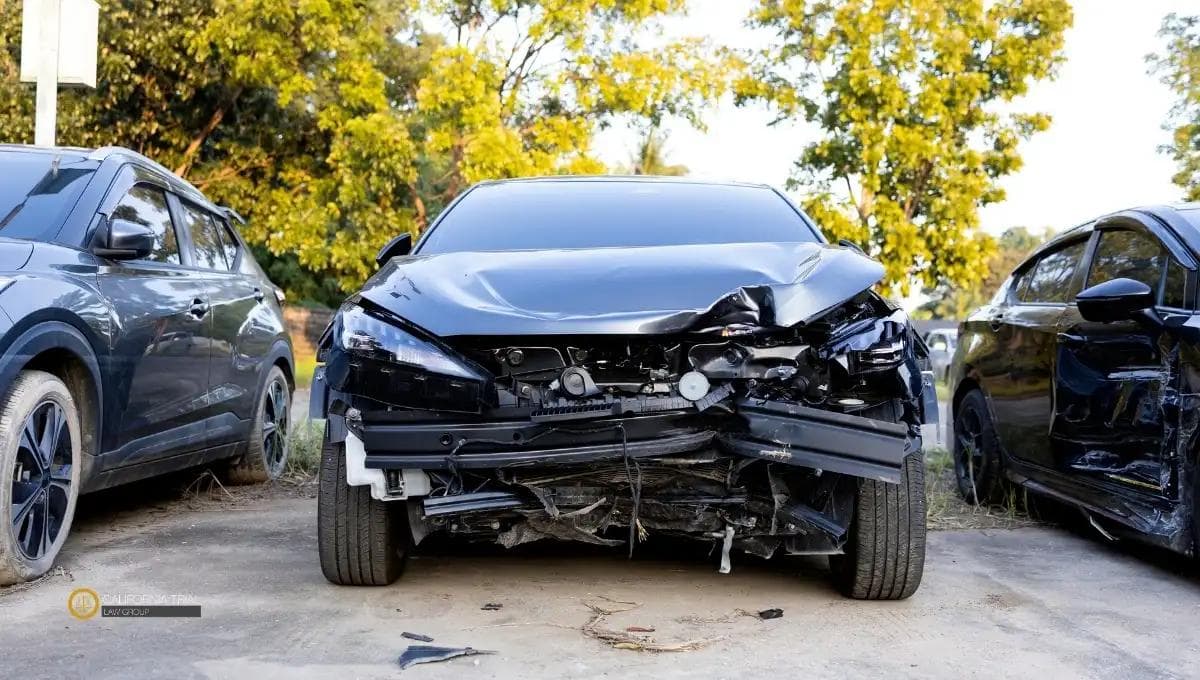
Most rear-end collisions are not accidents in any meaningful sense. They are the direct result of a driver who made a preventable choice.
- Tailgating / Following Too Closely: An unsafe following distance leaves no margin to stop when traffic slows or halts.
- Distracted Driving: Phones, navigation systems, and infotainment screens divert attention from slowing or stopped vehicles until it is too late to react.
- Stop-and-Go Traffic: High-density freeway conditions create chain-reaction risks when any driver in the queue loses focus, even briefly.
- Aggressive Driving and Road Rage: Brake-checking, abrupt lane changes, and deliberate close following during rush hour are direct contributors across California's major corridors.
- Reduced Visibility and Wet Roads: Rain, fog, and glare extend stopping distances while impairing sight lines. California's tule fog, concentrated in the Central Valley, is a recurring factor in reduced-visibility rear-end crashes statewide.
- Impaired Driving: Alcohol, cannabis, and prescription medications all slow reaction time. An impaired driver traveling at freeway speed requires significantly more distance to stop than a sober one.
Hit From Behind?
California Trial Law Group protects rear-end accident victims from lowball offers, comparative fault arguments, and quick-settle strategies designed to close your case before your injuries are fully understood.
Who Is at Fault in a California Rear-End Crash?
Fault determines everything in a rear-end claim: who pays, how much, and whether the insurer has room to argue your injuries were pre-existing or unrelated. California law and case precedent give rear-end victims real leverage, but only if the evidence is preserved and the liability narrative is built before the insurer sets its position.
California’s Presumption of Fault for Rear-End Drivers
CVC §21703 requires drivers to maintain a safe following distance. Courts presume the rear driver violated this duty in a rear-end collision, creating a rebuttable presumption of negligence.
The driver in front has no obligation to justify why they stopped. A sudden stop for a red light, pedestrian, or road hazard is a foreseeable event on any California road. Insurers frequently argue that the front driver “stopped too suddenly.” That argument fails under California law when the rear driver was tailgating or distracted.
What If You Share Some Fault for the Crash?
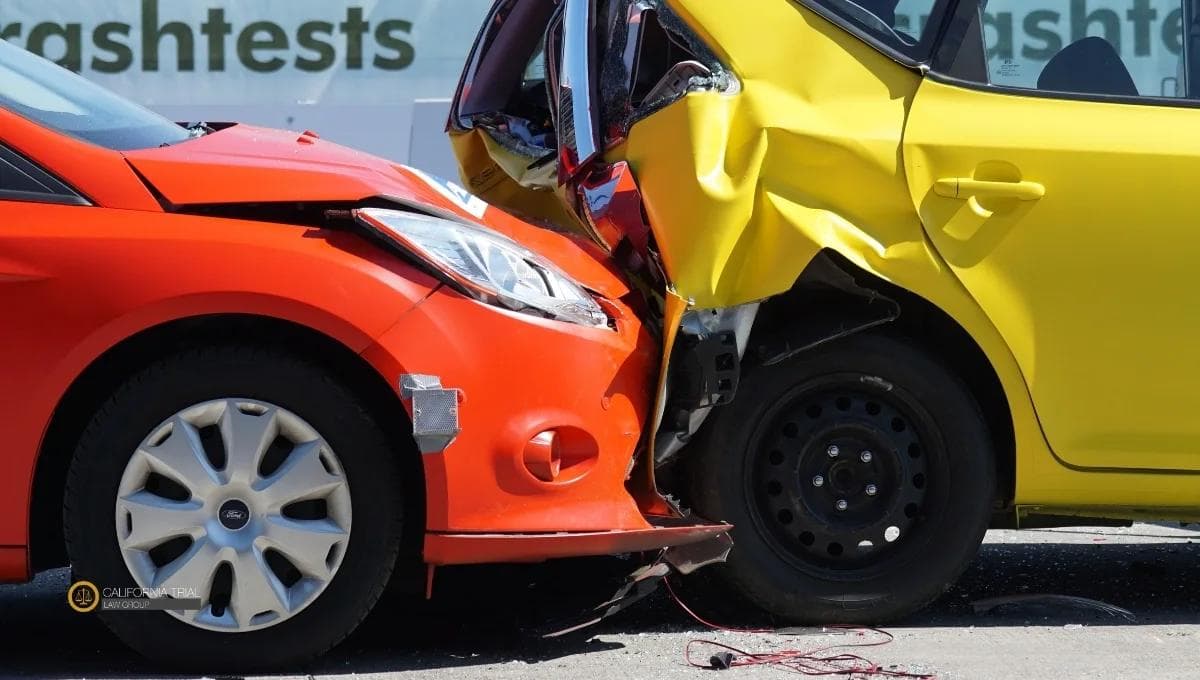
California's pure comparative negligence rule allows injured rear-end victims to recover compensation even if they share some fault for the collision, with damages reduced in proportion to their assigned percentage.
As the front driver, you may be assigned partial fault if:
- Your brake lights were faulty or non-functional
- You reversed into traffic without checking mirrors or blind spots
- You made a sudden illegal lane change with no time for the rear driver to react
A court assigns you a percentage of fault and reduces your recovery accordingly. You still recover the remainder. For instance, if a jury finds you 20 percent at fault and awards $100,000, you recover $80,000. Insurers routinely inflate your fault percentage to cut their payout. We counter that early with evidence, timelines, and a liability narrative built before the insurer sets their position.
When a Third Party Shares Liability
Fault does not always rest with the drivers. Government entities may share liability when road design contributed to the crash, including inadequate merge signage, unmarked lane reductions, or confusing interchange geometry. When a third party is involved, additional claims and shorter filing deadlines apply. Early investigation is critical.
California Rear-End Accident Laws and Key Rules
California rear-end accident claims are governed by specific statutes, deadlines, and reporting rules that directly affect a victim's ability to recover compensation.
- Statute of Limitations: In most personal injury cases, CCP §335.1 gives you two years from the date of the crash to file a lawsuit for injury or wrongful death caused by another’s wrongful act or neglect. If a government entity is involved, you must file an administrative claim within six months before any lawsuit can proceed.
- DMV Reporting Rule (SR‑1): California requires you to file a DMV SR-1 report within 10 days if anyone was injured or killed, or if property damage exceeds $1,000. This is separate from your insurance claim and is one of the first official records of the collision.
- Minimum Insurance Requirements: California DMV requires drivers to carry proof of financial responsibility, usually through auto liability insurance or an approved alternative. Current minimum liability limits are $30,000 for injury or death to one person, $60,000 for more than one person, and $15,000 for property damage.
If you were hit from behind, an experienced car accident attorney in California can help you track deadlines, reporting obligations, and coverage limits.
What to Do After a Rear-End Crash in California
If you were rear-ended in California, act quickly but deliberately to protect your health and your legal rights.
- Get medical care. Do not assume you are fine; internal injuries or whiplash often appear days later.
- Call law enforcement to file a formal report and document the scene. Take photos of vehicle damage, debris, and road conditions.
- Exchange information, including names, insurance details, and witness contacts.
- Report the crash to the DMV within 10 days if damage exceeds $1,000 or if anyone is injured.
- Avoid recorded statements to the other driver’s insurer without legal advice.
- Preserve evidence. Save all medical records, repair receipts, and photos.
- Talk to a California injury lawyer early. Early investigation can make the difference between a disputed claim and a well-supported one.
For a complete post-crash guide, see our What to Do After a Car Accident in California.
What Compensation Can You Recover in a California Car Accident Claim?
If liability is proven in a rear-impact car accident claim, you can typically recover compensation for both tangible expenses and intangible losses caused by the crash. The goal is to put you in the financial position you would have been in if the other driver had not been negligent.
| Economic damages | Non‑economic damages |
|---|---|
|
|
In limited rear‑end cases where the driver was intoxicated or acting with extreme recklessness, you may also be eligible for punitive damages, which are intended to punish outrageous conduct and deter similar behavior. These are rare in car‑accident cases and require a higher standard of proof, but an experienced rear‑end accident lawyer can assess whether your facts support pursuing them.
What Does California Trial Law Group Do for Your Rear-Impact Accident Case?
From the moment you contact us, California Trial Law Group treats your rear‑end crash like any other serious injury case: we build a trial‑ready strategy but always give you honest choices about whether to settle or litigate.
- We treat “fender bender” injuries with the same seriousness as catastrophic crashes. Whether your crash looked small or escalated into a multi‑car pile‑up, we treat your pain, losses, and limitations as the real injuries they are. We coordinate with medical and financial specialists to document your condition properly and avoid the “minor‑impact” trap insurers use to cut your recovery short.
- We build liability‑focused rear‑end cases, not settlement‑only files. Many firms push for quick settlements to close cases. We prepare every rear‑impact case as if it will go to trial, securing police or CHP reports, dashcam and traffic‑cam footage, EDR data, cell‑phone records, and, when necessary, accident‑reconstruction experts. This trial‑ready posture gives you real leverage in negotiations.
- We protect you from being blamed for your own injuries. Insurers often argue that rear‑end victims should have “braked sooner” or “not been in that lane,” even when you had no reason to anticipate a sudden stop. We push back on those arguments by using evidence that shows where the true fault lies.
Our Commitment to You
- Proven Results for Rear-End Crash Victims. We have recovered $15 million in a high-impact freeway rear-end collision where the defendant admitted fault, and $4.7+ million in a rear-end crash where the defense argued low speed and disputed the injuries entirely. The collision type was the same. The insurer tactics were not, and we were prepared for both.
- No Fee Unless We Win. You pay nothing up front and owe nothing if we do not recover for you. Our contingency fee structure is explained in plain language before you sign anything.
- Free Consultation, No Pressure. We evaluate your rear-end crash case at no cost. If we believe you have a strong claim, we tell you why. If we think the case has challenges, we tell you that too.
- We Come to You. If your injuries prevent you from traveling, we can meet at your home, hospital room, or by video call. This is not an exception we make; it is how we operate for injured clients.
- Available When You Need Us. Rear-end crashes do not happen between 9 and 5. Neither do the questions that follow them. You can reach us outside business hours, and we will respond.
- Statewide Representation. We handle rear-end crash cases throughout California, including the Bay Area, Central Valley, and Southern California. Distance is not a barrier to representation.
"I highly recommend Ike Kaludi and his team for anyone needing legal assistance in personal injury cases. Ike's extensive experience was evident and very helpful throughout the process. He was always ready to explain each step, discuss all possible outcomes, and provide examples from previous cases, which greatly aided my understanding and decision-making. His human, patient approach, especially his willingness to dedicate time (even sometimes on weekends!) to assist and prepare me, was exceptional. The professionalism and responsiveness of his team members, including Abigail, Mayra, Jean, Ramon, and Austin, were also key factors in the successful resolution of my challenging and lengthy case. For expert advice, commitment, and client care, Ike Kaludi and his team are the go-to professionals."
— Lisa R. · Google Review · 2024
How Insurers Fight Low-Speed Rear-End Claims and How We Counter It
When a collision looks minor, insurers often deploy a strategy called the MIST defense: Minor Impact Soft Tissue. The argument is that if vehicle damage is small, your injuries cannot be serious. It is a claims-management tactic, not a legal standard, and California courts impose no requirement for visible vehicle damage as a threshold for compensable injury.
How we counter it:
- We request Event Data Recorder (EDR) data to establish the actual change in velocity at impact.
- We document your injuries through your treating physicians and, when necessary, independent medical evaluators.
- We build a timeline connecting the collision to your symptoms from the first day, before the insurer sets their reserve.
If an insurer calls your injury minor, we show them the data that says otherwise.
California Cities We Serve as Car Accident Attorneys
Our attorneys handle car accident cases across California - bringing legal guidance directly to your community.
Ready to Talk? Your Consultation Is Free and Confidential
Time is critical after a rear-end crash in California. Physical evidence disappears. Medical records become harder to connect to the collision. Insurers routinely argue that a gap of even a few weeks between the crash and your first doctor visit means your injuries came from something else, not the impact.
Our team of auto accident attorneys at California Trial Law Group acts immediately to preserve evidence, counter those arguments, and build a documented claim that reflects the true value of your injuries and future needs.
Contact us to schedule a free, no-obligation, and confidential consultation.

ATTORNEY ADVERTISING: The information on this website is for general informational purposes only and does not constitute legal advice. California Trial Law Group does not form an attorney-client relationship through this website. The attorney listings on the site are attorney advertisements and should not be viewed as a referral or endorsement by any state agency or bar association. No certification as a specialist in any field of law is claimed by the lawyers listed here. Results from one case are not a guarantee of future outcomes, as each case has unique aspects. This website is intended to provide general information; it is up to you to decide if a particular attorney is suitable for your legal needs. You may be responsible for certain costs or expenses in addition to any contingency fee arrangement for attorney's fees. By using this site, you agree to our Terms and Conditions. This site is protected by reCAPTCHA and the Google Privacy Policy and Terms of Service apply.
The contents of this website and any attached or linked materials are intended solely for informational purposes and should not be taken as legal advice for any individual case or situation. Viewing this material does not create an attorney-client relationship. Choosing an attorney is a crucial decision and should not be based solely on advertisements. The outcome of your specific case will depend on its particular facts; previous results do not guarantee a similar outcome. Each case must be evaluated on its own merits. Reports of past cases on this website are not intended to generate unjustified expectations about any future case you might have.
California Trial Law Group is dedicated to defending the rights of the elderly in nursing home abuse cases. Our website offers general information and directs you to contact us for personalized legal advice tailored to the specifics of your situation. No attorney-client relationship is established by your use of this site or by any communication initiated through this website's contact forms. California Trial Law Group © 2026. All Rights Reserved.