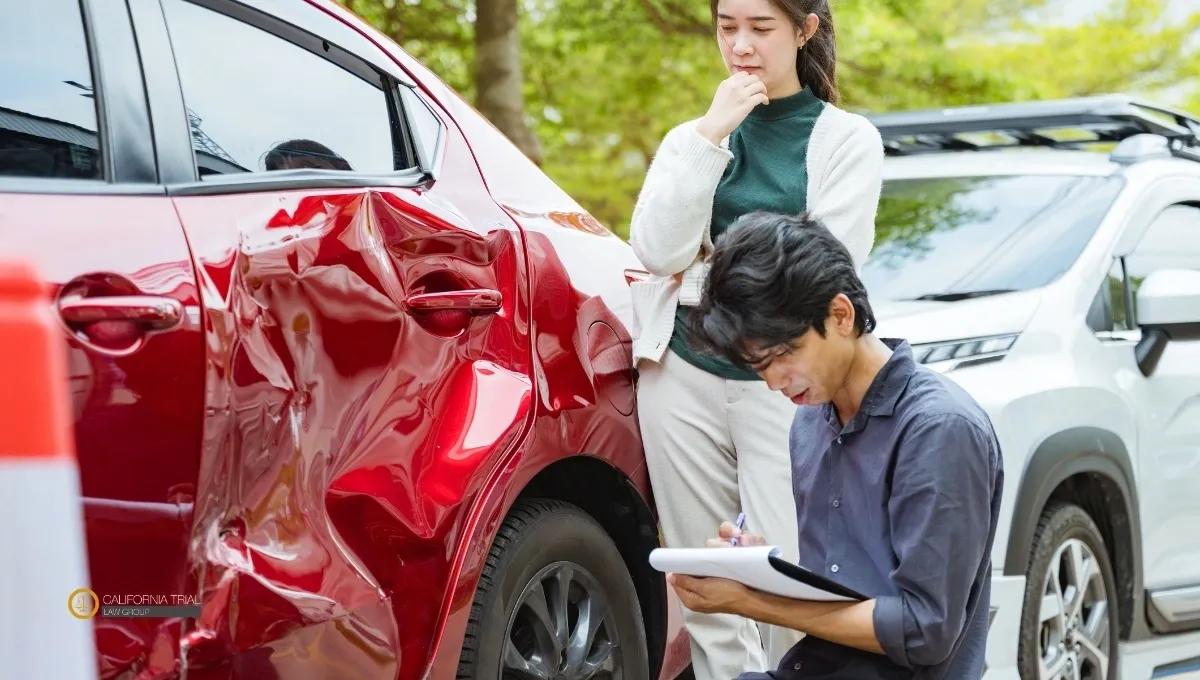
Driving anywhere in California carries real risk. California recorded 3,727 fatal crashes and 14,412 serious injury crashes in 2023, according to UC Berkeley SafeTREC. When a crash happens on roads like the I-405, I-880, or I-5, the legal clock starts immediately: medical bills stack up, insurance adjusters begin calling, and strict reporting deadlines keep moving forward.
California car accident laws govern your post-crash duties, applicable insurance, financial responsibility for damages, and legal action deadlines. Below, we’ll cover the essential framework of California’s at-fault system, including key legislative changes taking effect from 2025 through 2026.
Whether you are dealing with a minor fender-bender or a catastrophic injury and wondering, “Who pays for this?” then understanding these rules and working with a California car accident lawyer who understands them can help you protect your rights, avoid costly deadline mistakes, and pursue the full compensation you're owed.
| Legal Change | Prior Standard | Current Rule (Effective 2025–2026) | Why it matters to you |
|---|---|---|---|
| Auto Insurance Minimum Liability Limits (SB 1107) |
(15/30/5) $15,000 bodily injury per person $30,000 bodily injury per accident $5,000 property damage Often the bare minimum many drivers carried. |
(30/60/15) $30,000 bodily injury per person $60,000 bodily injury per accident $15,000 property damage For policies issued or renewed on/after Jan 1, 2025 |
If the other driver has only minimum coverage, this change can increase what’s available, but only if their policy is renewed under the new limits. |
| “Slow Down, Move Over” expanded (AB 390) | Move over/slow down mainly for emergency vehicles and tow trucks. | Now includes any stopped vehicle with hazard lights or warning devices (cones/flares). Effective Jan 1, 2026 | A move-over violation after a crash scene can be used to support an argument of negligence, especially in secondary-collision cases. |
| Rideshare passenger UM/UIM reduced (SB 371) | Commonly treated as $1M UM/UIM while “on-trip”. | Reduced to $60k per person / $300k per incident for passengers while “on-trip.” Effective Jan 1, 2026. | This is a major cut. It can make your personal UM/UIM coverage and other underinsured avenues far more important after a rideshare crash. |
| Speed safety camera pilots approved (AB 645) | No statewide authority for automated speed camera systems in pilot zones. | Pilot programs authorised in cities including Oakland, San Francisco, and San Jose; rollout/expansion continues through 2026. | In some cities, speed-camera data may become relevant evidence, while in others it won’t exist at all. |
| Autonomous vehicle emergency-response duties added (AB 1777) | No specific statutory duty for manufacturers to coordinate with first responders. | Added requirements for certain driverless AV operators, including emergency-response access and communication measures. Starts July 1, 2026. | This affects how incidents involving driverless vehicles may be handled at the scene, and how records/communications may be preserved. |
Important note: Insurance outcomes still depend on the details, your policy renewal date, the other driver’s actual coverage, the city where the crash happened (for speed systems), and a rideshare driver’s exact app status at the moment of impact.
At California Trial Law Group, trial attorney Ike M. Kaludi helps clients make sense of exactly these details, policy dates, coverage gaps, and how the new rules apply to their specific crash. Request a free case review to get clarity before making any decisions.
No. California is an at-fault (tort) state when it comes to personal injury cases.
In many “no-fault” states, drivers are required to carry Personal Injury Protection (PIP) and turn to their own insurance for medical bills regardless of who caused the crash.
In contrast, California’s fault-based system requires the person responsible for the accident to pay for the resulting damages. Because of this, you must prove the other driver’s fault and negligence to recover compensation. That means liability usually comes down to a proof framework: duty of care + breach + causation + damages, supported by real-world evidence.
In California car accident cases, drivers have a duty of care, meaning they must use reasonable care on the road, including maintaining a proper lookout, controlling speed, and driving safely. Failing to meet this standard is negligence. To prove a claim, you must connect the driver's unsafe choice to hard evidence, supporting the crash story with facts.
Common Breaches and Supporting Evidence:
| Unsafe Driving “Breach” | Proof That Commonly Supports It (Evidence Examples) |
|---|---|
| Speeding / too fast for conditions | Scene photos, skid marks, vehicle event data recorder (black box), traffic camera footage, witness statements. In crash cases involving trucks, black box data is often the most critical piece of evidence. |
| Distracted driving | Phone records (when available), witness testimony, dashcam video showing eyes/hand position, and inconsistent driver statements |
| Unsafe lane change/failure to yield | Vehicle damage angles, lane markings, intersection geometry, dashcam footage, and independent witnesses |
| Running a red light/stop sign | Signal timing evidence, nearby business/security camera footage, witness accounts, time/location-stamped photos |
| Following too closely (tailgating) | Rear-end collision damage patterns, braking distance evidence, dashcam footage, admissions in texts/recorded statements |
| Impairment or fatigue | Law enforcement observations, field sobriety findings, crash report indicators, and witness descriptions of erratic driving |
When a driver violates a safety statute (like a traffic law), that violation can create a presumption of negligence under California’s negligence-per-se rule, though it’s not automatic and can be rebutted depending on the facts.
Fault in car accidents is rarely one-sided, and California’s pure comparative negligence rule reflects that reality: injured claimants can still recover compensation even if they share some blame. However, the final recovery is reduced by the percentage of shared fault. This is especially relevant in multi-vehicle chain-reaction crashes, where fault is often disputed across several parties.
For example, if your total damages (medical bills, car repairs, and lost wages) equal $100,000, but it is determined that you were 20% at fault (for example, by speeding slightly), your final recovery will be $80,000.
“I was hit from behind on my motorcycle while on the freeway. I knew the insurance company only wanted save money. Attorney Ike Kaludi was great. He explained the process to me from the beginning and fought for me until the end. Ike got me every penny that was available to me. He maximized my compensation. I won't ever be the same again, but at least Ike and his team set up for the future. I recommend Ike with my life."
— Cesar Sanchez, Google Review
Timing is just as critical as evidence. If you miss the statutory window (statute of limitations) to file your case, the court will dismiss it regardless of how clear the other driver's fault may be.
Exceptions:
After a crash, most people aren’t thinking about statute numbers or policy limits - they’re thinking, “Am I covered?” and “What happens next?” California’s minimum insurance rules changed recently, and it matters more than most drivers realize, because being under the legal minimum can create problems even before fault is sorted out.
For the first time in more than 50 years, California updated its financial responsibility requirements. Under SB 1107, any auto policy issued or renewed on or after January 1, 2025, must carry at least 30/60/15 in liability coverage. That means the old 15/30/5 minimum is no longer sufficient for many drivers once their policy renews.
| Coverage Type | New Minimum Limit | What This Pays For |
|---|---|---|
| Bodily Injury (Per Person) | $30,000 | The most your insurer pays for one person’s injury claim (medical costs, lost income, pain and suffering, etc.). |
| Bodily Injury (Per Accident) | $60,000 | The total amount available for everyone injured in the same crash. |
| Property Damage | $15,000 | Repairs or replacement for the other person’s car or property you damage. |
It depends on when your policy was last renewed. If your renewal date is after January 1, 2025, your liability limits generally need to be at least 30/60/15 to meet the updated minimum standard. Driving with outdated limits after that renewal point can lead to avoidable complications, especially if a claim triggers proof-of-insurance requirements.
Even with the new minimums, 30/60/15 is only a legal baseline, not a safety net. In California, one ER visit, imaging, follow-up care, and missed work can quickly exceed those limits, especially when injuries carry long-term spinal cord costs, the hidden costs of an injury, or involve a cervical injury. If you're found at fault and the losses exceed your policy limits, the other party may pursue the remaining amount beyond insurance, depending on the facts and available legal options.

Even with higher minimum limits in 2026, a tough reality hasn’t changed: on California roads, you can do everything right and still get hit by a driver who has no insurance or not enough coverage to pay for the damage they caused. That’s exactly where Uninsured/Underinsured Motorist coverage (UM/UIM) can protect you.
When Uninsured Motorist (UM)/Underinsured Motorist (UIM) typically applies:
Watch Out: UM/UIM is deadline-driven
UM/UIM claims are heavily policy-controlled, which means the rules can be stricter than people expect. Notice deadlines, reporting steps, and proof requirements vary by insurer, and waiting too long can create avoidable problems. Treat it like evidence preservation: save every message, keep copies of documents, and don’t assume you can “submit it later” without consequences.
“I like many involved in a car accident tried to take on the insurance company alone, after many months of the run around and out right harassment I received from the other parties insurance I decided to hire a lawyer and let them handle it! Thank God I did. Ike got me the treatment I desperately needed with an amazing chiropractor and went full force on the insurance company. After I was offered pennies by the insurance company Ike was able to settle my suite for the maximum amount!! Thank you so much Ike, Miles, and everyone else in the firm who played a part! I'm forever grateful."
— Tajma Myles, Google Review
In California, your actions immediately following a collision are governed by strict sections of the Vehicle Code. These are legal mandates, not suggestions. UC Berkeley SafeTREC finds that 20% of traffic fatalities are preventable with optimal post-crash care, indicating that the minutes immediately following a collision are crucial medically and legally. Failing to perform your duties can escalate a simple accident into a criminal hit-and-run investigation, regardless of who was at fault.
Your Legal “Must-Do” Checklist:
Do the legal minimum first so you stay on the right side of the law. Then protect your claim: photograph the scene and vehicle damage, get witness names and numbers, get a medical evaluation (even if symptoms feel minor), and file the DMV’s SR-1 if required within 10 days. These steps help prevent insurers from using documentation gaps or missed reporting to reduce what you can recover.
If you're unsure what to do in the hours after a crash, this guide on what to do after a car accident in California walks you through the full process step by step.
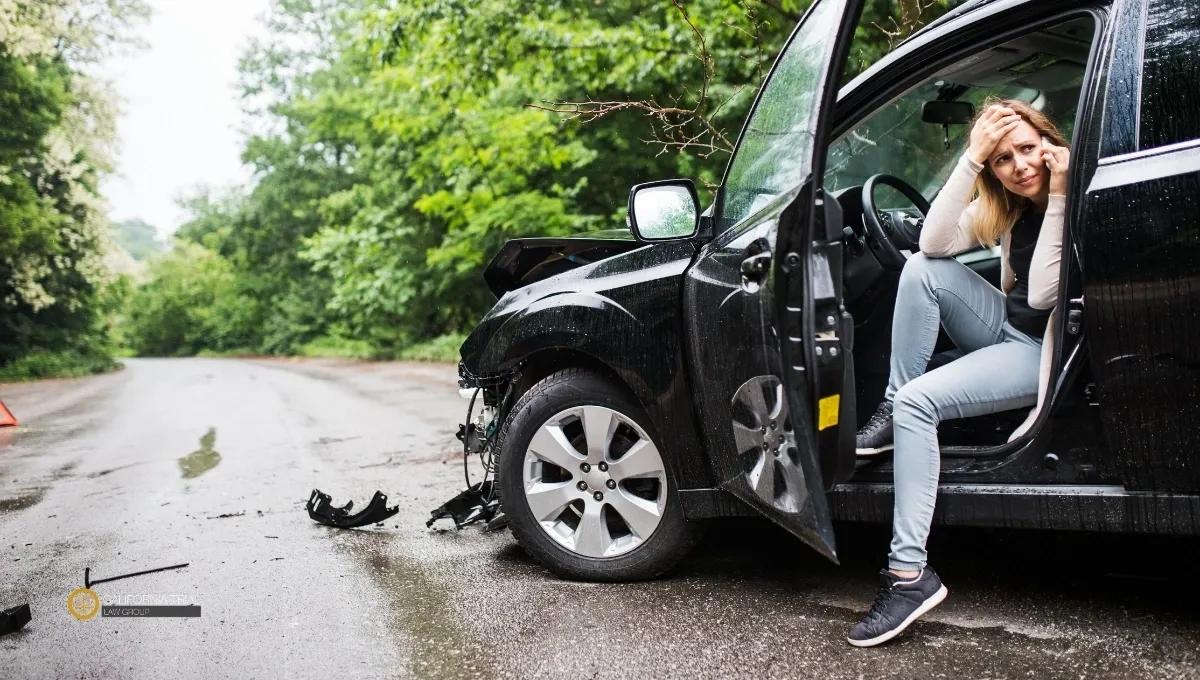
Starting January 1, 2026, California expanded its “Slow Down, Move Over” rule. It no longer applies only to emergency vehicles and tow trucks. Under AB 390, drivers must also slow down or move over for any stationary vehicle that is showing flashing hazard lights or warning devices (such as cones, flares, or similar signals).
So if you’re pulled over on I-880 with your hazards on, drivers approaching you have a legal duty to give you space.
Your Legal Duties Under California Assembly Bill 390:
| DO | DON'T |
|---|---|
| Move over one lane as soon as it’s safe, creating an empty lane between your vehicle and the stopped vehicle. | Don’t stay in the lane next to the stopped vehicle at full speed when you have time and room to safely move over. |
| If you can’t move over safely, slow to a “reasonable and prudent” speed for the conditions. | Don’t wait for sirens or emergency lights. Hazard lights, cones, or flares can trigger the duty on their own. |
| Signal early and make your lane change predictable for surrounding traffic. | Don’t cut off other drivers. If a lane change isn’t safe, slowing down is the required alternative. |
Why It Matters for Liability After a Crash:
Roadside collisions are often viewed as preventable because the hazard is usually visible. In an injury claim, a violation of a safety statute like AB 390 can be used as evidence of negligence, and in some situations may support a presumption of negligence, which can significantly affect fault and financial responsibility.
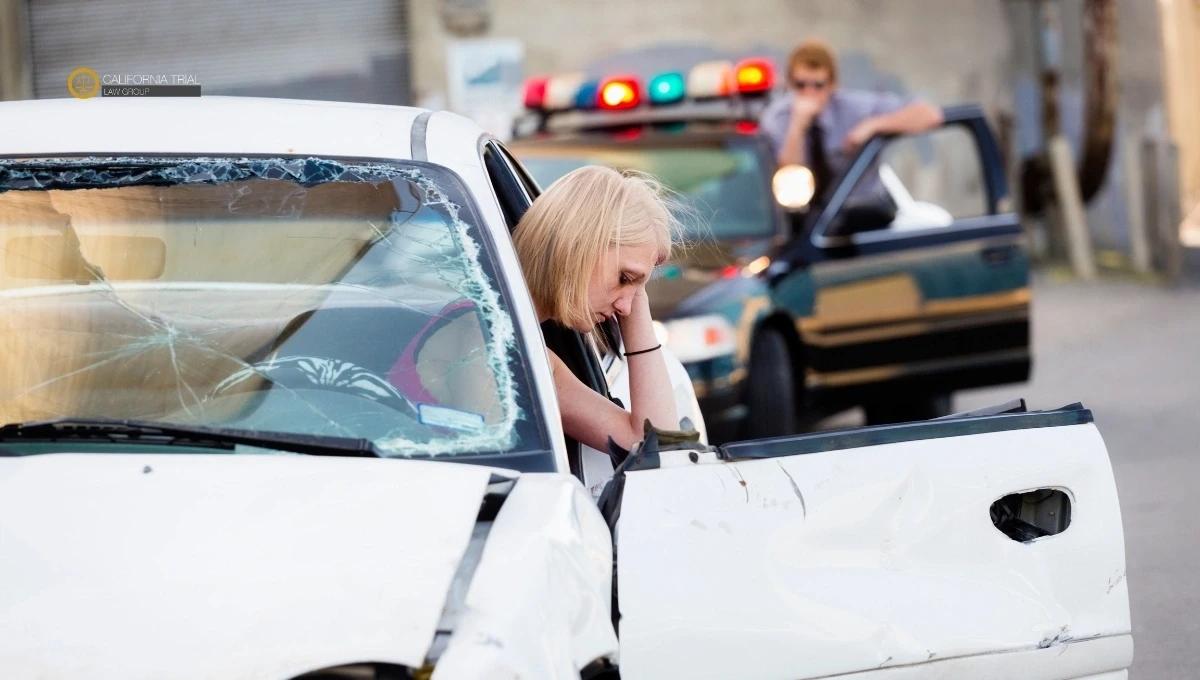
After a crash, it’s common to assume that if police showed up, the reporting is handled. In California, it often isn’t. DMV reporting and law enforcement reporting are separate legal duties, and completing one does not satisfy the other. Missing a required report can create avoidable problems, including DMV consequences and complications with insurance or a later claim.
Start with the DMV’s 10-day SR-1 requirement, then confirm whether the crash also triggers a police/CHP report.
DMV requires an SR-1 within 10 days if a crash involves any injury or death (even minor injuries) or property damage over $1,000. This DMV filing is separate from any police/CHP report and separate from your insurance claim. In many cases, the SR-1 requirement can apply even when the crash happens on private property (like a parking lot).
If you’re not sure whether the $1,000 threshold is met, it’s usually safer to file. DMV can suspend driving privileges if the SR-1 isn’t submitted when required.
The Consequence: If you fail to file an SR-1 within the 10-day window, the DMV may suspend your driver’s license until the report is filed. If the driver is physically incapacitated, the duty to report may shift to an occupant or the vehicle owner.
While the DMV report is administrative, notifying law enforcement addresses public safety and documents crash facts. Under CVC § 20008, if an accident results in injury or death, a written report to the local police department or the California Highway Patrol (CHP) is required within 24 hours.
You Should File a Report If:
If an officer takes a report, ask for the report number/incident ID before you leave the scene. A police report, while strong evidence for liability, is not always mandatory to win a civil personal injury claim.
Some new 2026 traffic laws are important not just for rules, but for the evidence available after an accident. Two key laws now control how crash evidence is recorded and how car manufacturers are held accountable for technology problems.
California has authorized a five-year pilot program for automated speed safety systems (AB 645) in select cities, including Los Angeles, San Francisco, Oakland, San Jose, Long Beach, and Glendale. Unlike traditional red-light cameras, these systems are specifically designed to detect speeding in high-injury corridors and school zones.
What Evidence May Exist:
AB 645 records can be confidential and restricted, so whether they’re obtainable for a claim depends on the city’s process and legal requests.
Starting July 1, 2026, California's AB 1777 adds compliance duties for certain manufacturers operating driverless autonomous vehicles under DMV permits, focused on first-responder access and emergency scene management.
Key Manufacturer Duties:
While traditional evidence, like witness statements, remains important, these new laws can change what additional evidence may exist and who may be relevant to investigate.
Reality Check: Evidence won’t exist for every crash. It depends on whether the collision happened in an active pilot area and whether a driverless AV system (and its operator) is involved.
What NOT to Say:
Insurance adjusters and defense attorneys scrutinize early statements to deny claims or shift fault. In our experience, the most damaging statement is also the most common: “I'm fine,” said at the scene out of politeness or shock and later cited in adjuster notes to minimize injury severity. Protect your claim by following these rules:
For a broader overview of your rights and options after a crash, see our car accident resources.
After an I-5 pileup or an East Bay freeway crash, the new minimums and new reporting rules don’t make insurers more generous. They still look for fault-shifting, delay, and documentation gaps to reduce payouts. You don’t have to juggle adjusters, forms, and deadlines alone.
Whether you’re trying to understand California’s 2026 crash laws or dealing with a collision right now, a quick legal review can help you identify the right coverage, confirm required reporting, and protect key deadlines.
If you want facts-specific guidance from a California car accident lawyer headquartered in Albany, request a Free and confidential case consultation.
Our team represents injured clients throughout the state. If you were involved in a crash, we have experience handling car accident claims in San Jose, Fremont, Concord, and Antioch.
Not always. Property-damage-only claims with clear fault are often handled directly with insurance. Consider a lawyer if you have injuries, disputed fault, UM/UIM or hit-and-run issues, rideshare involvement, or a government/public-entity crash (deadlines can be strict). If you're weighing your options, this breakdown of what to ask a car accident lawyer can help you decide.
California follows a “fault-based” insurance system. Under this policy, the driver responsible for causing a crash is legally liable for all resulting damages, including medical bills, property damage, and pain and suffering. Victims typically recover compensation by filing a third-party claim against the at-fault driver’s insurance or by pursuing a personal injury lawsuit.
A salvage vehicle is a car that has been damaged or wrecked so severely that the insurance company determines it is not economical to repair. Once a vehicle is “totaled,” the DMV issues a Salvage Certificate, which permanently brands the title.
Yes, you can still recover compensation because failing to wear a seat belt is not an automatic bar to recovery in California. However, under comparative negligence, your award may be reduced if the defense proves your injuries were worsened by not buckling up.
If a minor causes an accident, the parents or guardians who signed the minor's driver’s license application are usually held civilly liable for damages. Additionally, the statute of limitations for a minor to file their own claim is extended until two years after they turn 18.
Rideshare coverage depends on the driver’s app status at the moment of the crash (offline, available, or on an active trip). When a ride is accepted or in progress, a $1 million liability policy often applies.
Important: The 2026 change is about UM/UIM when another driver (not the rideshare driver) is uninsured or underinsured; it does not reduce the rideshare driver’s liability coverage.
Starting 2026, the required UM/UIM coverage for rideshare passengers is much lower, as little as $60,000 per person, which can make your own UM/UIM coverage and other available policies more important.
Fault is determined by analyzing evidence such as police reports, witness statements, and dashcam footage to see who breached their duty of care. In California, juries or adjusters assign a percentage of fault to each party based on their contribution to the crash.
You can recover economic damages, such as medical bills and lost wages, as well as non-economic damages like pain and suffering and emotional distress. In cases involving permanent disability or catastrophic injuries, future medical costs and lost earning capacity can represent the largest share of damages. In rare cases involving willful misconduct or extreme recklessness, a court may also award punitive damages to punish the defendant.
Yes, you can file a claim even if you were partially at fault due to California’s pure comparative negligence rule. You remain eligible for compensation even at 99% fault, though your final recovery is reduced by your specific percentage of responsibility.
California car accident claims resolve on different timelines depending on injury severity. Soft tissue cases with clear liability typically settle in 3 to 6 months. Surgery or spinal injury cases take 18 to 36 months, since settlement should wait until maximum medical improvement is confirmed. Cases that proceed to trial average 3 to 5 years from filing. Insurer cooperation, evidence strength, and injury complexity all affect the outcome. Settling before treatment is complete is one of the most costly mistakes a crash victim can make.
![[object Object]](/_next/image?url=%2F_next%2Fstatic%2Fmedia%2Fbadge-12.dc462899.png&w=1920&q=75)
![[object Object]](/_next/image?url=%2F_next%2Fstatic%2Fmedia%2Fbadge-1.84d39f5d.png&w=384&q=75)
![[object Object]](/_next/image?url=%2F_next%2Fstatic%2Fmedia%2Fbadge-3.30517db2.png&w=384&q=75)
![[object Object]](/_next/image?url=%2F_next%2Fstatic%2Fmedia%2Fbadge-4.c449d07d.png&w=384&q=75)
![[object Object]](/_next/image?url=%2F_next%2Fstatic%2Fmedia%2Fbadge-5.251e1420.png&w=1080&q=75)
![[object Object]](/_next/image?url=%2F_next%2Fstatic%2Fmedia%2Fbadge-6.e1d85cbc.png&w=384&q=75)
![[object Object]](/_next/image?url=%2F_next%2Fstatic%2Fmedia%2Fbadge-7.3fcf7c05.png&w=384&q=75)
![[object Object]](/_next/image?url=%2F_next%2Fstatic%2Fmedia%2Fbadge-8.3e662d12.png&w=384&q=75)
![[object Object]](/_next/image?url=%2F_next%2Fstatic%2Fmedia%2Fbadge-9.60ef0ba6.png&w=384&q=75)
![[object Object]](/_next/image?url=%2F_next%2Fstatic%2Fmedia%2Freputation-award.3f62935c.png&w=3840&q=75)
![[object Object]](/_next/image?url=%2F_next%2Fstatic%2Fmedia%2Fbadge-11.9de1d49a.png&w=1920&q=75)
![[object Object]](/_next/image?url=%2F_next%2Fstatic%2Fmedia%2Fbadge-13.de4d644c.png&w=640&q=75)