
California Hit and Run Accident Attorney
Over $30 Million Won for California Clients in 2025 Alone
![[object Object]](/_next/image?url=%2F_next%2Fstatic%2Fmedia%2Fbadge-12.dc462899.png&w=1920&q=75)
![[object Object]](/_next/image?url=%2F_next%2Fstatic%2Fmedia%2Fbadge-1.84d39f5d.png&w=384&q=75)
![[object Object]](/_next/image?url=%2F_next%2Fstatic%2Fmedia%2Fbadge-2.736d1614.png&w=384&q=75)
![[object Object]](/_next/image?url=%2F_next%2Fstatic%2Fmedia%2Fbadge-3.30517db2.png&w=384&q=75)
![[object Object]](/_next/image?url=%2F_next%2Fstatic%2Fmedia%2Fbadge-4.c449d07d.png&w=384&q=75)
![[object Object]](/_next/image?url=%2F_next%2Fstatic%2Fmedia%2Fbadge-5.251e1420.png&w=1080&q=75)
![[object Object]](/_next/image?url=%2F_next%2Fstatic%2Fmedia%2Fbadge-6.e1d85cbc.png&w=384&q=75)
![[object Object]](/_next/image?url=%2F_next%2Fstatic%2Fmedia%2Fbadge-7.3fcf7c05.png&w=384&q=75)
![[object Object]](/_next/image?url=%2F_next%2Fstatic%2Fmedia%2Fbadge-8.3e662d12.png&w=384&q=75)
![[object Object]](/_next/image?url=%2F_next%2Fstatic%2Fmedia%2Fbadge-9.60ef0ba6.png&w=384&q=75)
![[object Object]](/_next/image?url=%2F_next%2Fstatic%2Fmedia%2Freputation-award.3f62935c.png&w=3840&q=75)
When a driver flees the scene, they do not just break the law. That criminal act becomes direct evidence of negligence in your civil case.
However, the first question most victims ask is: who do you recover from if the driver is never found? Under California law, your Uninsured Motorist (UM) coverage compensates you for medical bills, lost wages, and pain and suffering even when the at-fault driver is never identified. But there are strict conditions: you must file a DMV report within 10 days and notify your insurer promptly, or you risk forfeiting your right to compensation entirely.
This is where our California hit-and-run accident attorney steps in. Led by Super Lawyer-rated trial lawyer Ike Kaludi, who has secured over $29 million in a California auto accident hit-and-run case, our team does not wait for police reports. Within hours of your call, we preserve license plate reader data, surveillance footage, dashcam records, and witness statements before they are gone permanently.
Do not let the evidence vanish. Call (888) 238-7562 now for a free consultation.
The California Trial Law Group Advantage
-
•
Verified Case Results
- ◦ $531,939 recovered in a hit-and-run arbitration where the defense challenged injury severity.
- ◦ $150,000 recovered for a mother and two children in a hit-and-run collision in poor weather conditions.
- • Super Lawyers Recipient: 2024–2025
- • Rising Stars Recipient: 2016–2023
- • Named one of the Top Attorneys of North America
- • Selected as one of the best attorneys by SFGate
- • 4.7 Stars on Google from verified clients across California
- • Contingency Fee Guarantee: You pay no attorney fees unless we win
- • Bilingual Support: Serving clients in English and Spanish
Past results do not guarantee future outcomes. Results vary based on the specific facts of each case.
What Is a Hit and Run Under California Law?
A hit and run occurs when a driver involved in a traffic collision leaves the scene without stopping to provide their name, address, and insurance information, or to offer reasonable aid to anyone injured. Under California Vehicle Code § 20001, this obligation applies to any accident involving injury or death. Under California Vehicle Code § 20002, it applies to property damage even when no one is hurt. Leaving the scene is a crime regardless of who caused the crash.

What Should You Do After a Hit and Run Accident in California?
The moments after a hit and run are disorienting, but what you do next directly affects your ability to recover compensation. Follow these steps in order.
- Capture the Fleeing Vehicle's Details: Note the color, make, model, and any part of the license plate you can see. Any physical characteristic of the driver visible to you also matters.
- Call 911: A hit and run is a crime. Calling the police creates an official record of the incident and is required under California law when injury occurs. That dispatch record becomes the foundation of your insurance claim and any legal action.
- Document the Scene: Photograph your vehicle, visible injuries, skid marks, road conditions, and the surrounding area, including nearby businesses and traffic cameras. Note the direction the driver fled.
- Collect Witness Information: Get names and phone numbers before anyone leaves. Witnesses forget details within hours. A statement collected at the scene carries far more weight than one taken days later.
- File a Police Report: Required to open a UM claim. Without it, your insurer has grounds to deny uninsured motorist coverage entirely.
- Notify Your Insurer: Report the accident promptly. California UM policies carry strict notice deadlines. Missing your policy's notice requirement gives your insurer grounds to deny your claim, regardless of injury severity.
- File a DMV SR-1 Form: Required within 10 days when the accident caused injury, death, or property damage exceeding $1,000. Failure to file can result in license suspension and directly jeopardize your ability to pursue compensation.
- Contact a California car accident attorney: Your lawyer can file formal preservation demands for surveillance footage, secure license plate data, and manage all communications with your insurer.
Who Pays When the Driver Who Fled Is Never Found?
When the at-fault driver is unidentified, California Insurance Code 11580.2 classifies the accident as an uninsured motorist (UM) claim. Your own insurer becomes the source of compensation and is legally required to offer UM coverage to every California policyholder.
Filing a UM Claim Means Filing Against Your Own Insurer
When you file a UM claim, you are not filing against a stranger. You are filing against your own insurance company, which has adjusters, in-house legal staff, and a direct financial incentive to minimize the payout. Their internal claim valuation will not reflect the full value of your injuries.
One condition many overlook: California UM law requires that the fleeing vehicle make physical contact with you or your vehicle. If the driver forced you off the road without direct impact, the claim must be structured carefully to satisfy this requirement. California law also allows victims without their own UM coverage to recover through a qualifying relative's policy, a parent, sibling, or child with whom they live, even when their name is not on that policy. If your policy includes Medical Payments (MedPay) coverage, it can also pay for immediate medical costs while the larger UM claim is still being evaluated.
When UM negotiations fail, California law provides for binding UM arbitration. A neutral arbitrator decides the value of the claim. Insurers are experienced in arbitration proceedings. Thorough preparation, equivalent in depth to trial-level litigation, is the most effective counter.
If the Hit and Run Driver Is Later Identified
When law enforcement identifies the fleeing driver through a witness tip, traffic camera, or investigation, the claim converts from a UM proceeding to a direct personal injury lawsuit. An identified driver exposes their own liability policy limits and opens the door to punitive damages when their conduct was sufficiently reckless. If the identified driver carries liability insurance that is insufficient to cover your losses, your own Underinsured Motorist (UIM) coverage may make up the difference. An attorney who preserved evidence from day one places the victim in the strongest position on both tracks.
What Does California Law Require When a Driver Hits You?
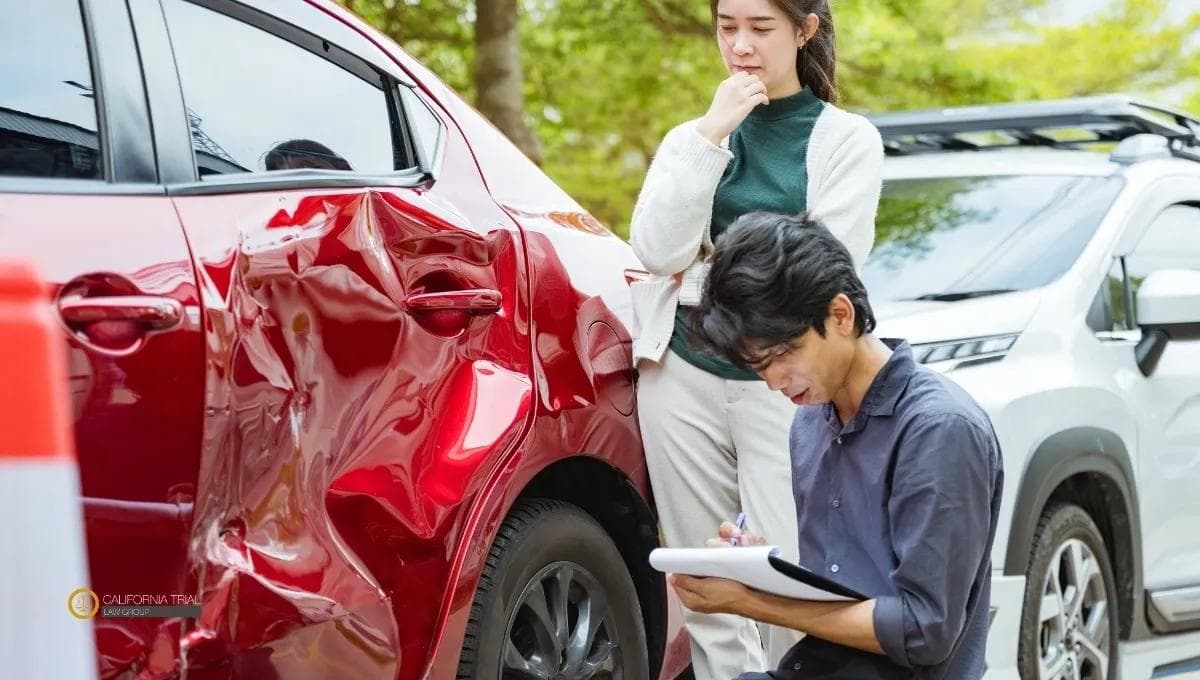
California Vehicle Code laws require every driver involved in a collision to stop immediately, provide their name, address, and insurance information, and render reasonable aid to anyone injured. These obligations apply regardless of who caused the crash.
| Code Section | Situation | Classification | Maximum Penalty |
|---|---|---|---|
| CVC 20001 | Collision with injury or death | Felony | 4 years state prison, $10,000 fine |
| CVC 20002 | Property damage only | Misdemeanor | 6 months county jail, $1,000 fine |
The criminal obligation to stop is entirely separate from civil liability. A driver who was not at fault for the collision still commits a crime by leaving. A criminal conviction is admissible as evidence of negligence in a civil lawsuit. When the driver is identified and criminally charged, the criminal case record becomes a direct asset in the victim's civil claim.
What Types of Hit and Run Accidents Does California Trial Law Group Handle?
California Trial Law Group handles all categories of hit and run collisions throughout California, including vehicle-to-vehicle, pedestrian, bicycle, motorcycle, and property-damage-only accidents.
- Vehicle-to-Vehicle: Rear-end, head-on, intersection, and sideswipe collisions where the at-fault driver flees before exchanging information. Common on Bay Area freeways, Los Angeles surface streets, and Central Valley corridors.
- Pedestrian Hit and Run: Pedestrian victims face the most severe injuries and the most urgent evidence timeline. Surveillance footage in pedestrian strike zones is overwritten within hours.
- Bicycle and Motorcycle Hit and Run: Riders have no protective frame. These cases frequently involve traumatic brain injury, spinal cord damage, and fractures requiring surgical intervention.
- Parked Car and Property Damage Only: No physical injury is required to pursue a property-damage UM claim. Coverage applies depending on policy terms.
If you were injured in any of these circumstances, do not wait for a police investigation to move forward. California Trial Law Group evaluates hit-and-run claims at no cost and begins evidence preservation the same day you call.
What Compensation Is Available in a California Hit and Run Claim?
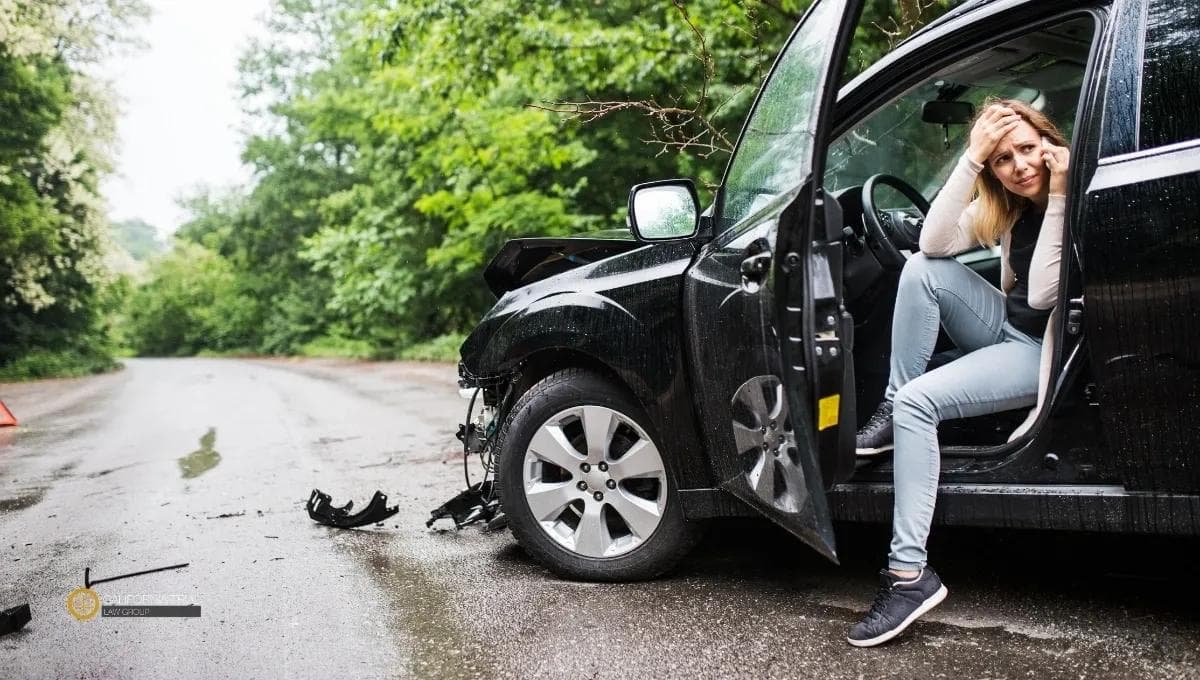
California hit-and-run victims can recover economic damages, non-economic damages, and, when the driver is identified, punitive damages. The available amount depends on injury severity, whether the driver is found, and the coverage limits in play.
Economic damages cover calculable financial losses:
- Medical bills, including emergency care, surgery, rehabilitation, and future treatment
- Lost wages and diminished earning capacity
- Property repair or replacement
- Ongoing disability costs, such as home modification or a life care plan
Non-economic damages compensate for losses with no invoice:
- Physical pain and suffering
- Emotional distress and loss of enjoyment of life
- Disfigurement
- Loss of consortium for a spouse or domestic partner
Punitive damages apply only when the at-fault driver is identified, and their conduct meets the standard of malice, oppression, or fraud under California Civil Code §3294. A driver who fled while intoxicated or who had prior hit-and-run convictions presents the strongest basis. Punitive damages are awarded in addition to, not instead of, compensatory amounts.
If the hit-and-run crash results in fatality, surviving family members may pursue a wrongful death claim to recover funeral costs, lost income, and loss of companionship.
One factor that applies across all damage categories: California follows a pure comparative negligence rule. If you were partially at fault for the accident, your total compensation is reduced by your percentage of fault rather than eliminated. A victim found 20 percent at fault, for example, recovers 80 percent of their total damages.
How Does California Trial Law Group Handle a Hit and Run Case?
When a driver flees, the evidence they leave behind has an expiration date. We start the clock the moment you call.
Every hit-and-run case receives the following:
- Immediate LPR Data Requests: Within hours of retention, we submit formal preservation demands for license plate reader (LPR) data from local law enforcement and private networks. Some agencies purge records within 72 hours of a shift change.
- Surveillance Canvassing: Traffic signal cameras, business exterior cameras, parking structure feeds, and residential systems along the escape route are identified and subpoenaed before footage is overwritten.
- Dashcam Solicitation: Rideshare drivers, delivery vehicles, and commercial fleets that may have captured the incident are contacted and sent preservation demands before files are automatically deleted.
- Accident Reconstruction: When speed, point of impact, or vehicle identification is contested, a certified reconstruction specialist produces a defensible technical analysis.
- UM Insurer Communications: Every communication with your insurer runs through our firm. Recorded statements are not given without preparation. Early lowball offers are countered with documented evidence of full economic and non-economic losses.
- UM Arbitration Preparation: When insurers refuse a fair settlement, our attorneys prepare for binding UM arbitration with the same depth as jury trial preparation, because insurers can assess which opposing counsel is prepared to go the distance.
Your insurance company has full-time adjusters, staff attorneys, and a financial incentive to close your claim for less than it is worth. You have one case, injuries to manage, and a statute of limitations clock running. Our California personal injury lawyers close that gap.
Serving California Hit and Run Victims from the Bay Area to Los Angeles
California Trial Law Group is headquartered at 828 San Pablo Ave. Suite 109, Albany, CA 94706, and serves clients statewide.
California Cities We Serve as Car Accident Attorneys
Our attorneys handle car accident cases across California - bringing legal guidance directly to your community.
Remote intake is available by phone and video for clients outside these areas. All services are available in English and Español.
Your Case Does Not End Because the Driver Fled | Get a Free Case Review
You shouldn't be held financially responsible for someone else's criminal negligence. At California Trial Law Group, we focus on finding paths to recovery when others say there are none. From filing your DMV report to securing million-dollar settlements, we handle every detail of your hit-and-run claim with zero upfront costs to you.
No attorney fees unless we recover compensation for you | Bilingual support in English and Español | We come to you if you cannot travel

ATTORNEY ADVERTISING: The information on this website is for general informational purposes only and does not constitute legal advice. California Trial Law Group does not form an attorney-client relationship through this website. The attorney listings on the site are attorney advertisements and should not be viewed as a referral or endorsement by any state agency or bar association. No certification as a specialist in any field of law is claimed by the lawyers listed here. Results from one case are not a guarantee of future outcomes, as each case has unique aspects. This website is intended to provide general information; it is up to you to decide if a particular attorney is suitable for your legal needs. You may be responsible for certain costs or expenses in addition to any contingency fee arrangement for attorney's fees. By using this site, you agree to our Terms and Conditions. This site is protected by reCAPTCHA and the Google Privacy Policy and Terms of Service apply.
The contents of this website and any attached or linked materials are intended solely for informational purposes and should not be taken as legal advice for any individual case or situation. Viewing this material does not create an attorney-client relationship. Choosing an attorney is a crucial decision and should not be based solely on advertisements. The outcome of your specific case will depend on its particular facts; previous results do not guarantee a similar outcome. Each case must be evaluated on its own merits. Reports of past cases on this website are not intended to generate unjustified expectations about any future case you might have.
California Trial Law Group is dedicated to defending the rights of the elderly in nursing home abuse cases. Our website offers general information and directs you to contact us for personalized legal advice tailored to the specifics of your situation. No attorney-client relationship is established by your use of this site or by any communication initiated through this website's contact forms. California Trial Law Group © 2026. All Rights Reserved.