
California Spine Injury Lawyer | Legal Help for Spinal Cord Injury Victims
Over $30 Million Won for California Clients in 2025 Alone
![[object Object]](/_next/image?url=%2F_next%2Fstatic%2Fmedia%2Fbadge-12.dc462899.png&w=1920&q=75)
![[object Object]](/_next/image?url=%2F_next%2Fstatic%2Fmedia%2Fbadge-1.84d39f5d.png&w=384&q=75)
![[object Object]](/_next/image?url=%2F_next%2Fstatic%2Fmedia%2Fbadge-2.736d1614.png&w=384&q=75)
![[object Object]](/_next/image?url=%2F_next%2Fstatic%2Fmedia%2Fbadge-3.30517db2.png&w=384&q=75)
![[object Object]](/_next/image?url=%2F_next%2Fstatic%2Fmedia%2Fbadge-4.c449d07d.png&w=384&q=75)
![[object Object]](/_next/image?url=%2F_next%2Fstatic%2Fmedia%2Fbadge-5.251e1420.png&w=1080&q=75)
![[object Object]](/_next/image?url=%2F_next%2Fstatic%2Fmedia%2Fbadge-6.e1d85cbc.png&w=384&q=75)
![[object Object]](/_next/image?url=%2F_next%2Fstatic%2Fmedia%2Fbadge-7.3fcf7c05.png&w=384&q=75)
![[object Object]](/_next/image?url=%2F_next%2Fstatic%2Fmedia%2Fbadge-8.3e662d12.png&w=384&q=75)
![[object Object]](/_next/image?url=%2F_next%2Fstatic%2Fmedia%2Fbadge-9.60ef0ba6.png&w=384&q=75)
![[object Object]](/_next/image?url=%2F_next%2Fstatic%2Fmedia%2Freputation-award.3f62935c.png&w=3840&q=75)
No Upfront Fees. You Pay No Attorney Fees Unless We Win.
A catastrophic spine or spinal cord injury can change your life in seconds. Sudden mobility loss, the fear of lifelong medical care, and immediate pressure from insurance companies to settle fast can leave you feeling overwhelmed and powerless. When the harm involves a major hospital system, a corporate trucking fleet, or a government entity, the imbalance of power only grows.
When that happens, you deserve clarity, and you deserve to know that your future care is secure. At California Trial Law Group (headquartered in Albany, CA), our California spine injury lawyer provides statewide civil-side representation focused on holding negligent parties accountable. From a high-speed auto accident injury on the I-80 corridor to serious spine damage caused by a fall on unsafe premises in Sacramento or San Francisco construction zones, our legal help centers on protecting your future.
If you want to speak confidentially about your options, the evidence that matters, and next steps, we’re here to help you move forward with confidence.
Free consultation starts with a confidential intake call. If your case has legal standing, an attorney will review your options. Submitting information does not create an attorney-client relationship.
Attorney Advertisement: California Trial Law Group | 828 San Pablo Ave., Suite 109, Albany, CA 94706 | Ike M. Kaludi, Active License in California
Representative Past Outcomes in Spinal Injury Claims
Catastrophic spine damage cases require more than just settlement talks; they demand significant resources, experienced experts, and a trial-ready negotiation posture. Spinal injury attorneys at our firm approach these serious injury claims with an impressive track record and high-value outcomes for life-changing spinal diagnoses.
Representative Spinal Injury Case Results
| Final Recovery | Type of Case | Key Dispute Raised |
|---|---|---|
| $15,000,000 | Spinal Injury & Radiculopathy | Resulting from a complex liability incident. Defense disputed the extent of long-term nerve damage. |
| $4,750,000 | Catastrophic Injury | Settlement secured for a victim requiring long-term care and significant life modifications. |
| $1,500,000 | T-Bone Collision | T-bone collision resulting in spinal injury and surgery. Defense claimed low speed and challenged the severity. |
| $400,000 | Trucking Collision | Freeway collision involving an 18-wheeler. Defense challenged the causation of the spinal injury. |
| $200,000 | Spinal injury from a rear-end collision | Defense disputed medical causation and the extent of spinal damage |
| $150,000 | Spinal injuries to a rideshare passenger | Liability allocation and scope of spinal injury damages |
These results highlight how our firm has resolved different spine injury claims in the past, including cases involving disputed force, causation, and surgery. They are provided for informational purposes only and do not guarantee future outcomes.
Understanding Your Injury: Types of Spinal Damage
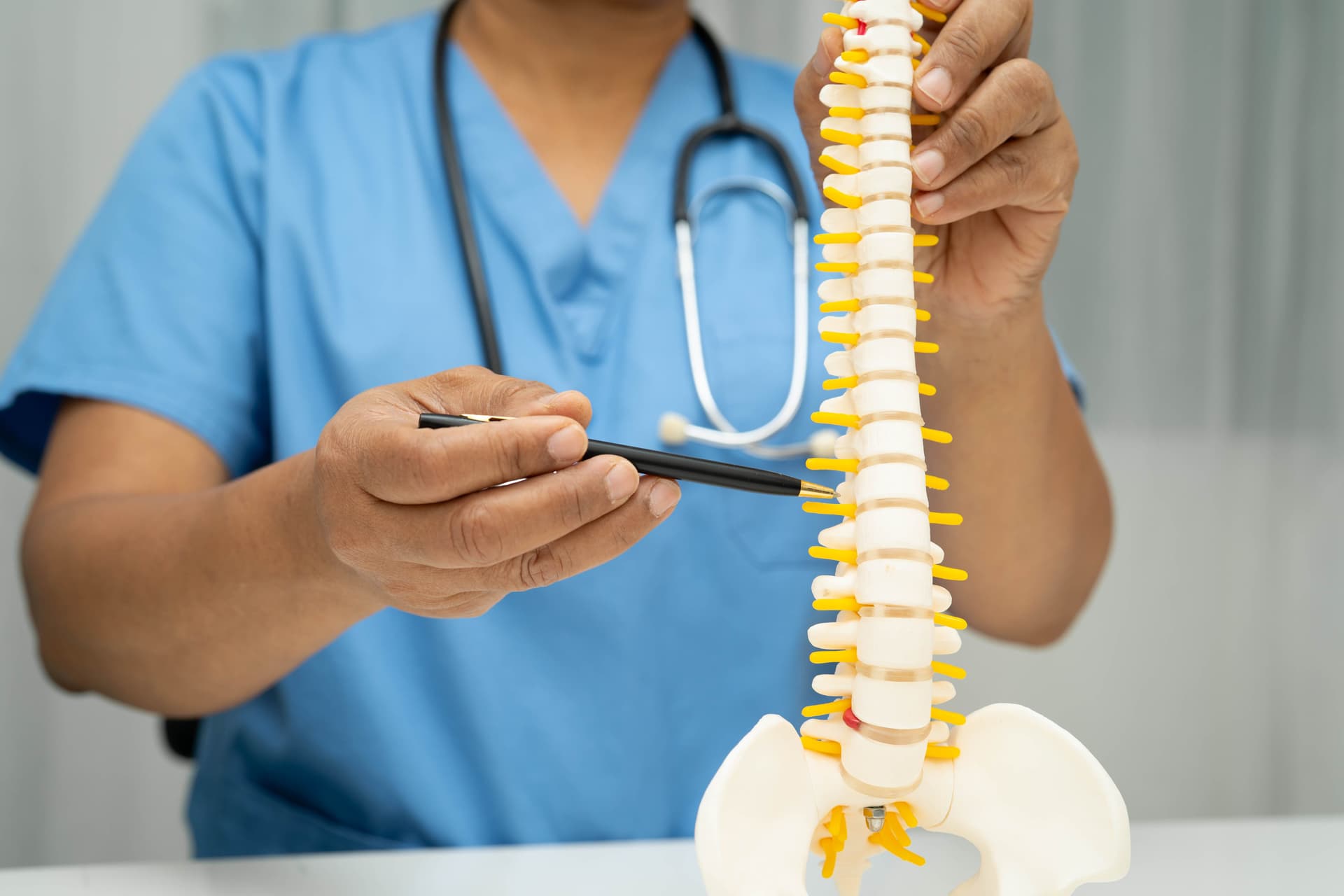
To an insurance adjuster, a "back injury" is often a line item used to undermine how serious spinal damage really is. To us, the anatomical level of your injury defines your future medical needs and long-term costs. We work with medical experts to distinguish temporary soft-tissue strains from permanent spinal cord damage so your recovery reflects the true functional impact on your life.
Because outcomes depend on where the spine is injured and how function is affected, understanding the major types of spinal damage is essential.
Cervical Spine Injuries (C1–C8)
Injuries to the neck region are often the most severe due to their proximity to the brain. It can potentially result in tetraplegia (quadriplegia).
- C1–C4: Often impacts breathing and requires 24-hour personal care.
- C5–C8: May preserve some arm movement but typically results in loss of fine motor control in hands and fingers.
Thoracic Spine Injuries (T1–T12)
These injuries affect the upper and mid-back, involving the chest and abdominal muscles. This often results in paraplegia.
- T1–T5: Affects abdominal muscles and upper chest/mid-back stability.
- T6–T12: Usually results in normal upper-body movement but little to no control of the hips or legs.
Lumbar and Sacral Injuries (L1–L5 & S1–S5)
These injuries affect the lower back and often result in loss of function in the hips and legs, as well as bladder and bowel control issues.
Clinical Note: Damage to the nerve roots at the base of the spinal cord can lead to Cauda Equina Syndrome, a clinical emergency requiring immediate surgical intervention to prevent permanent paralysis. We also litigate cases involving Cauda Equina Syndrome.
Complete vs. Incomplete Spinal Cord Injury (SCI)
- Complete SCI: Total loss of sensory and motor function below the level of the injury.
- Incomplete SCI: Some pathways and functions remain intact.
The Defense Tactic: The "completeness" of an injury is a frequent battleground in litigation. Insurance companies often use "recovered" arguments in incomplete SCI cases to suggest the injury is minor. We counter this by demonstrating persistent limitations through imaging, specialist opinions, and functional capacity testing.
Why Choose California Trial Law Group for Injury Cases?
We do not simply manage claims; we build cases for the courtroom. We prepare every file for trial from day one, a posture that signals to insurance carriers that we are ready to litigate if a fair settlement is not offered.
The California Trial Law Group advantage:
- Litigation-Ready Positioning: Trial preparation isn’t a threat tactic; it’s the foundation of how we investigate, value, and present serious injury cases across California.
- Verified Results: Our track record includes victories of over $15 million for spinal cord injury claims.
- Medical Authority: We collaborate with preeminent medical experts from institutions like UCSF and Santa Clara Valley Medical Center to provide authoritative testimony on complex spinal pathology.
- Statewide Courtroom Experience: We have an established presence in local courts across the state, from Alameda and San Francisco to Los Angeles, Orange County, San Diego, and beyond.
- Recognized Excellence: Our attorneys have been honored with industry awards, including Super Lawyers 2024–2025 and recognition from the Top Attorneys of North America.
- Multilingual Advocacy: We offer full legal support in both English and Spanish, ensuring that language is never a barrier to justice.
- Contingency-Fee Commitment: We advance all litigation costs. You pay no attorney fees unless we successfully win your case.
Leading Causes of Spine Injury and Liability in California
In California spine injury claims, identifying the cause often determines liability theories, coverage limits, and the evidence needed to prove each category of damages.
Common causes tied to liability and coverage often include:
- Motor Vehicle Accidents (I-80, I-5, I-580): High-speed collisions on major arteries like I-80, I-5, and I-580 frequently cause cervical and lumbar spine injuries. Liability may involve commercial auto policies, trucking carriers, or rideshare coverage layers (driver, platform, or third-party insurers).
- Slips, Trips, and Falls on Unsafe Premises: Falls or structural hazards can lead to serious spinal damage. Claims focus on a property owner’s duty of care, notice of the hazard, and premises liability insurance.
- Workplace Accidents & Construction Accidents: Spine injuries may trigger workers’ compensation benefits, but third-party claims often exist against subcontractors, equipment manufacturers, or negligent drivers. This unlocks additional recovery beyond workers’ comp.
- Medical Malpractice: Failure to diagnose spinal compression, delayed treatment, or surgical errors can worsen outcomes. Liability turns on whether providers met the medical standard of care and whether malpractice coverage applies.
The cause of a spine injury guides evidence preservation, expert selection, and identifying every responsible party and insurance source, all of which directly affect the credibility, legal strength, and final value of the claim.

The Doctrine of Pure Comparative Negligence in California
California follows a "pure comparative negligence" system for personal injury claims, under which you can still file a claim even if you were partially at fault for the accident. However, your compensation is reduced by your percentage of fault, rather than barred altogether.
For example, if a jury determines your total damages are $1,000,000 but finds you were 20% responsible for the incident, your final settlement amount would be $800,000.
Despite what an insurance adjuster may tell you to dispute your claim, being partially at fault does not mean you "don't have a case." It simply means the final recovery is adjusted to reflect each party's level of responsibility.
How We Prove Fault and Causation in California Spinal Damage Claims
A medical diagnosis alone doesn’t win a spine injury lawsuit. At California Trial Law Group, we build a comprehensive evidence bridge that connects the negligent event to your clinical condition and, ultimately, to your lifelong functional limitations.
To do that, our proof framework focuses on three pillars:
1. Establishing Liability (Fault) and Preserving the Scene: We start by investigating what happened and who’s responsible. We also secure physical evidence before it disappears. This includes:
- Dispatching accident reconstruction experts to the scene.
- Subpoenaing nearby surveillance footage.
- Securing commercial vehicle data, including ECM/“black box” downloads.
2. Proving Medical Causation: A common dispute tactic of insurance companies is to claim a spinal injury is "degenerative" or "pre-existing." We rebut these claims by:
- Establishing a clear imaging timeline (MRIs/CT scans).
- Securing testimony from your treating physicians.
- Comparing pre-incident records to post-incident diagnostic findings.
3. Quantifying Future Needs: We meticulously project the long-term costs of your spine injury to ensure you are never left underfunded. We collaborate with:
- Life Care Planners to project future treatment, therapy, and assistive care needs.
- Vocational Experts to assess work limitations and the resulting impact on earning capacity.
- Economic Analysts to translate all future care needs into a defensible and comprehensive damages claim.
Claim Roadmap: What clients can expect upon hiring us
- Initial intake and thorough review of your incident after conflict checks.
- Evidence preservation and data requests
- Medical records collection and imaging review
- Liability and detailed damages demand package to insurers
- Negotiation or mediation efforts for fair resolution
- Informed lawsuit decision, if needed
- Discovery, experts, and motion practice
- Resolution by settlement or trial

Potential Compensation: The “Life Care Plan” Approach
Compensation in a serious spine injury case must account for all needs, including what you will pay later, not just today’s medical bills or what you’ve already paid. To project every anticipated cost you will face over the rest of your life, a Life Care Plan is what we comprehensively develop with medical and economic experts.
Potential damages you may secure in a spine injury claim are commonly divided into two categories:
Economic damages (financial losses):
- Past and future medical treatment, including surgeries, therapy, and medications.
- Rehabilitation and specialty care (e.g., facilities such as Rancho Los Amigos National Rehabilitation Center, when appropriate).
- Assistive devices, home/vehicle modifications, and in-home support.
- Lost wages and loss of future earning capacity.
- Ongoing care projected through a Life Care Plan.
Non-economic damages (human losses):
- Pain and suffering (chronic neurological pain and physical agony)
- Loss of enjoyment of life
- Emotional distress
- Loss of consortium (impact on a spouse or partner)
- Limited consideration of punitive damages or wrongful death components (Where applicable and fact-dependent)
The final value of a spinal injury claim is never arbitrary; it is a calculation based on specific variables, such as:
- Level and completeness of the spinal injury
- Surgery required and any complications
- Permanency and documented neurological deficits
- Strength and credibility of medical causation proof
- Insurance policy limits and coverage layers
- Comparative fault allocations
- Number of responsible defendants
- Quality of experts and Life Care Plan support
- Consistency of records and claimant credibility
What to Do After a Suspected Spinal Injury
If you suspect a spine or spinal cord injury early, careful steps can protect both your health and your rights.
- Seek Level I trauma care immediately if symptoms are severe or worsening; spinal injuries can evolve over hours or days.
- Follow all discharge instructions and activity restrictions exactly; gaps in care are often used to dispute severity.
- Obtain imaging follow-up and specialist referrals (orthopedics, neurology, neurosurgery) if pain, weakness, numbness, or radiating symptoms persist.
- Keep a symptom log noting pain levels, functional limits, sleep disruption, and daily activities affected.
- Preserve evidence. Keep vehicles unaltered when possible; save dashcam footage, photos, and contact information for witnesses.
- Avoid recorded statements to insurers before understanding your rights. Early statements can be taken out of context.
- Do not sign broad releases or authorizations without counsel, including requests from hospital-based or insurer representatives; these documents can waive important protections.
- Limit your social media presence by avoiding posts about the incident, your injuries, or physical activity.
- Contact a lawyer early. This allows for the immediate issuance of spoliation letters to preserve evidence that might otherwise be lost.
SCI Resources for California Families
| Resource Category | Organization Name | Why It Matters (Purpose) |
|---|---|---|
| Vocational & Independence | California Dept. of Rehabilitation (DOR) | Provides specialized advocacy and training to help those with spinal injuries return to competitive employment and independent living. |
| Specialized Rehabilitation | Rancho Los Amigos National Rehab | Offers world-class inpatient and outpatient programs in Southern California designed specifically for complex spinal cord dysfunction. |
| Integrated Medical and Rehabilitation Care | Santa Clara Valley Medical Center | A designated "Model System" facility that manages everything from acute trauma stabilization to long-term community reintegration. |
| Peer Support & Grants | NorCal SCI | A Northern California non-profit providing local information, peer groups, and small grants for medical equipment or home modifications. |
| Mentorship & Recreation | Triumph Foundation | Helps "bridge the gap" for the newly injured through care packages, mentorship programs, and adaptive sports and recreation. |
Areas We Serve Throughout California
Headquartered in Albany, CA, CTLG represents clients statewide. We focus on serious and catastrophic injury matters and routinely assist clients across California:
- Bay Area & Northern California: Alameda County (Albany, Berkeley, Oakland), San Francisco, San Jose, Contra Costa, and the North Bay.
- Central Valley: From Sacramento and Stockton down to Modesto, Fresno, and Bakersfield.
- Southern California: Greater Los Angeles area, Orange County, the Inland Empire, and San Diego.
If travel is limited due to injury, we come to you, including home or hospital consultations when appropriate, so you can focus on recovery while we handle the legal work.
Request a Free Initial Strategy Session With Us
You do not need to have a complete file of medical records or a final diagnosis to begin protecting your rights. As your California personal injury lawyer, we take over the heavy lifting of evidence preservation and investigation immediately so that you can focus on your medical recovery.
If you or a loved one has suffered a spinal injury, you need to know your rights before insurance companies close the door on your future care.
Schedule a free consultation or call (866) 756-6153 to discuss your future needs and how we can build a Life Care Plan that accounts for every challenge ahead.
Disclaimer: The information provided on this website does not constitute an attorney-client relationship. All case results are specific to the facts of those cases and do not guarantee similar outcomes.

ATTORNEY ADVERTISING: The information on this website is for general informational purposes only and does not constitute legal advice. California Trial Law Group does not form an attorney-client relationship through this website. The attorney listings on the site are attorney advertisements and should not be viewed as a referral or endorsement by any state agency or bar association. No certification as a specialist in any field of law is claimed by the lawyers listed here. Results from one case are not a guarantee of future outcomes, as each case has unique aspects. This website is intended to provide general information; it is up to you to decide if a particular attorney is suitable for your legal needs. You may be responsible for certain costs or expenses in addition to any contingency fee arrangement for attorney's fees. By using this site, you agree to our Terms and Conditions. This site is protected by reCAPTCHA and the Google Privacy Policy and Terms of Service apply.
The contents of this website and any attached or linked materials are intended solely for informational purposes and should not be taken as legal advice for any individual case or situation. Viewing this material does not create an attorney-client relationship. Choosing an attorney is a crucial decision and should not be based solely on advertisements. The outcome of your specific case will depend on its particular facts; previous results do not guarantee a similar outcome. Each case must be evaluated on its own merits. Reports of past cases on this website are not intended to generate unjustified expectations about any future case you might have.
California Trial Law Group is dedicated to defending the rights of the elderly in nursing home abuse cases. Our website offers general information and directs you to contact us for personalized legal advice tailored to the specifics of your situation. No attorney-client relationship is established by your use of this site or by any communication initiated through this website's contact forms. California Trial Law Group © 2026. All Rights Reserved.